
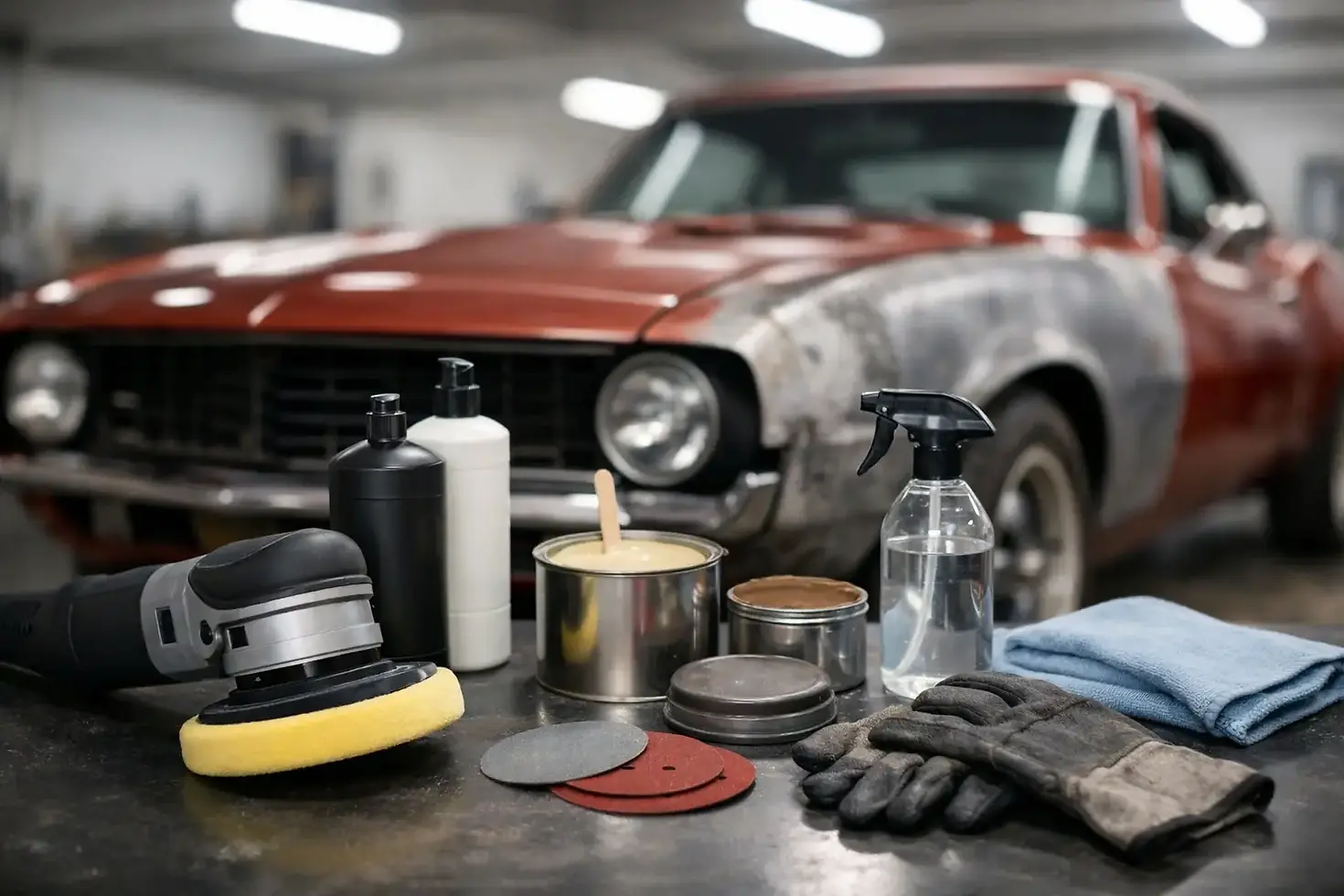
Auto Restoration Products That Actually Matter

A project car can look manageable right up until the first layer comes off. Then the real work shows up - rust hiding under seam sealer, old repairs under filler, thin paint, pitted metal, and hardware that should have been replaced years ago. That is why choosing auto restoration products is less about buying random parts and more about building a system that matches the job in front of you.
The difference between a solid restoration and a frustrating redo usually comes down to product selection. If the metal prep is wrong, the coating fails. If the filler is decent but the primer is weak, the finish won’t stay straight. If the rust treatment is an afterthought, the repair may look good for a season and come back worse later. Good results come from using products that are designed to work together across the full workflow.
https://www.eastwoodcanada.com/rust-system?currency=CAD
What auto restoration products need to do
Restoration work asks more from materials than basic maintenance does. You are not just cleaning a panel or touching up a scratch. You are often stripping, repairing, rebuilding, sealing, coating, and finishing surfaces that have already seen years of weather, heat, vibration, and poor previous repairs.
That means the right product has to solve a specific problem. A rust encapsulator has a different job than a converter. Body filler is not a substitute for metal repair. High-build primer can help straighten minor imperfections, but it cannot cover bad prep forever. The best auto restoration products are the ones that fit the stage of the job and the condition of the vehicle, not the ones with the loudest claims.
This is where experienced builders save time. They stop treating restoration supplies like one-off purchases and start thinking in categories: surface prep, rust treatment, coatings, refinishing, fabrication, and shop support. Once you organize the job that way, it gets easier to buy what you actually need.
Start with surface prep, not topcoat
A lot of failed paint and coating work starts before the first coat is sprayed or brushed. Surface prep is where adhesion, corrosion control, and finish quality are decided. If there is grease in the panel, loose scale in a seam, or old contamination in the substrate, premium paint will not rescue it.
A proper prep process usually includes degreasers, abrasives, stripping tools, and metal treatment products. The exact mix depends on the substrate. Bare steel, aluminum, fiberglass, and previously painted surfaces all need a slightly different approach. For example, aggressive stripping may be right for one panel and completely wrong for another if heat buildup or distortion is a concern.
Abrasives matter more than many buyers expect. Cheap discs that load up quickly or cut unevenly slow the job down and can leave a worse surface behind. The same goes for hand prep materials. If you are working body lines, jambs, or tighter areas, having the right abrasive format is not a luxury. It is the difference between controlled prep and accidental damage.
Rust repair products are where restorations are won or lost
If you work on older vehicles in Canada or anywhere that sees real moisture and road salt, rust is not a side issue. It is the job. That makes rust treatment one of the most important categories in any restoration catalog.
Not every rust product does the same thing. Some formulas are built to neutralize light surface corrosion. Others are designed to encapsulate prepared rust and isolate it from moisture and oxygen. Internal frame coatings and cavity waxes serve a different role altogether by protecting enclosed areas after repair. Seam sealers also belong in this conversation because unsealed joints are an open invitation for corrosion to return.
The trade-off is that rust repair is rarely quick if you want it to last. On a lightly oxidized part, a converter or prep treatment may be enough before primer and topcoat. On a perforated rocker, cab corner, or floor section, the right answer is cut, fabricate, weld, seal, and coat. No coating fixes missing metal. Good auto restoration products support proper repair - they do not replace it. https://www.eastwoodcanada.com/product-page/eastwood-rust-converter-quart-and-aerosol-kit?currency=CAD
Paint and primer systems should be chosen as a system
Restorers often focus on color, gloss, or spray gun settings, but primer choice has just as much impact on the final result. Epoxy primers are favored for adhesion and corrosion resistance over bare metal. High-build primers help level repaired surfaces before final sanding. Urethane primers can provide good filling characteristics when used in the right sequence.
The key is compatibility. Mixing random brands and chemistries can create problems with adhesion, curing, or topcoat appearance. Sticking with a known paint system usually gives more predictable results, especially when you are working through metal prep, primer, sealer, and color on the same project.
Single-stage and basecoat-clearcoat both have a place. A period-correct restoration may lean one way, while a custom build may call for another. There is no universal right answer. What matters is matching the finish to the build, your equipment, and your skill level. A product that gives a skilled painter show-quality results may not be the smartest choice for a garage builder spraying in sections.
Coatings for chassis, underbody, and hidden areas matter too
Visible panels get attention. The underside, suspension components, engine bay, trunk interior, and inner structures are where long-term durability is often decided. These are not glamorous purchases, but they are essential ones.
Chassis black, underbody coatings, ceramic engine finishes, frame coatings, and cavity protection products all serve specific restoration needs. Some are built for appearance, some for impact resistance, and some for corrosion protection in places you cannot easily revisit later. Using the wrong coating in the wrong environment can lead to peeling, softening, or early failure.
This is also where builders need to be realistic about finish expectations. A show car frame, a driver-grade truck underside, and a weekend autocross build do not need exactly the same coating strategy. Product choice should follow use case. If the vehicle will see weather, heat cycles, and road debris, durability should outrank cosmetic perfection.
Fabrication and repair products are part of restoration too
https://www.eastwoodcanada.com/product-page/eastwood-rust-converter-quart-and-aerosol-kit?currency=CAD
Auto restoration is not only about paint and polish. Many builds require cutting out damage, shaping patch panels, welding repairs, and finishing metal properly before any cosmetic work starts. That makes fabrication supplies a core part of the restoration product mix.
Welders, sheet metal tools, body hammers, dollies, brake tools, and panel prep materials all influence repair quality. Even something as simple as having the right seam sealer after welding can separate a proper repair from one that starts failing at the edges. If your project includes floor pans, quarter patches, trunk repair, or custom modifications, fabrication capability is not optional.
For independent shops and serious hobbyists, buying from a supplier that understands both refinishing and fabrication makes the process simpler. You are not piecing together a workflow from unrelated categories. You are buying toward the actual repair. https://www.eastwoodcanada.com/welding?currency=CAD
The best product catalog is organized around the job
A strong restoration supplier does more than stock parts. It helps you move from problem to solution without wasting time. If you are dealing with rust in a trunk floor, you should be able to source stripping abrasives, metal prep, patch panel tools, welding supplies, seam sealer, primer, and topcoat from the same restoration-focused catalog.
That matters because restoration work is full of dependencies. You may start shopping for paint and realize the project really needs rust treatment first. You may plan for a quick repair and discover that the panel needs fabrication tools and coatings for the backside before it can be finished correctly. Product depth saves time because it supports the way real projects unfold in the shop.
That is also why buyers across Canada look for a source that understands restoration-specific categories rather than general auto parts retail. Eastwood Canada is built for that kind of workflow, with products that support paint, rust repair, fabrication, garage upgrades, and finishing from one place.
How to buy auto restoration products without wasting money
https://www.eastwoodcanada.com/?currency=CAD
The smartest way to buy is to start with the vehicle condition and the repair standard you want. A driver-quality refresh, a long-term rust repair, and a full bare-metal restoration all call for different product stacks. Overspending on premium finishing materials while skipping prep and corrosion control is common, and it is backwards.
It also helps to buy in stages. First secure the products required to expose and evaluate the damage. Then buy for repair, protection, and finish. That keeps you from ending up with topcoats and trim materials before the metal work is even sorted.
Experience matters here, but so does honesty. Some jobs deserve a full system with epoxy, fillers, high-build primer, sealer, and topcoat. Some do not. If the vehicle is a working truck or a budget-minded cruiser, there may be a practical middle ground that still protects the repair and looks right. The goal is not to use the most products. The goal is to use the right ones in the right order.
Restoration gets expensive when products are treated like guesswork. It gets better when every cleaner, abrasive, coating, and tool has a clear purpose. Buy for the repair you are actually doing, and the finished vehicle has a much better chance of staying right after it leaves the garage.


Comments