

Automotive Rust Prevention Guide
- ERIC GIROUX
- Jul 9
- 6 min read

A truck can look clean on the outside and still be quietly rotting from the inside out. That is what makes rust expensive. By the time you see bubbling paint on a wheel arch or scaling on a frame rail, corrosion has usually been working for a while. A good automotive rust prevention guide starts with that reality: rust prevention is not one product or one weekend job. It is a system built around inspection, prep, coating choice, and follow-up.
For restorers, daily drivers, race car owners, and shop operators, the goal is not just to slow rust down. The goal is to keep metal solid, maintain value, and avoid turning a small repair into major fabrication later. That means knowing where moisture gets trapped, which coatings belong on bare steel versus existing rust, and when a cavity coating makes more sense than a hard topcoat.
What causes rust on a vehicle
Rust forms when iron, oxygen, and moisture stay in contact long enough to create corrosion. On a vehicle, that process speeds up fast because cars deal with road spray, humidity, winter salt, stone chips, and packed dirt. Add seams, spot welds, boxed frames, rocker panels, and underbody pockets that never fully dry, and you have ideal conditions for corrosion.
The biggest mistake is assuming visible surfaces are the whole problem. Rust often starts in hidden areas first. Inner fenders, door bottoms, cab corners, floor pans, trunk seams, windshield channels, suspension mounts, and the backsides of body panels are all common trouble spots. If you only protect what you can see standing next to the vehicle, you are leaving major risk areas untreated.
Automotive rust prevention guide: start with inspection
Before you buy coatings, inspect the vehicle like a restorer, not like a casual owner. Put it on a lift if possible, or at least use stands and good lighting. Look for chipped paint, seam sealer failure, clogged drain holes, old undercoating that is trapping moisture, and surface rust that has started to spread under factory finishes. https://www.eastwoodcanada.com/product-page/rust-converter-eastwood-shop-rust-converter-eastwood?currency=CAD
Pay close attention to places where two panels meet. Seams hold moisture and road debris. If the factory sealer has cracked or lifted, water gets in and stays there. Also check boxed sections and closed cavities. These areas may look fine from the outside while corrosion is already moving inside.
Inspection should also tell you what kind of job you are dealing with. Clean bare metal needs a different system than light surface rust. Heavy scale, perforation, or soft metal means prevention alone is no longer enough. At that point, you are in repair territory and may need cutting, welding, and patch panels before any coating work makes sense.
Surface prep decides how long protection lasts
Rust prevention products get most of the attention, but prep is what determines whether they hold up. Dirt, grease, salt residue, loose rust, and unstable old coatings will shorten the life of whatever goes over them.
Start with a proper cleaning and degreasing step. Undercarriages and engine bay areas often hold oil film that will ruin coating adhesion. After that, remove loose rust, flaking paint, and failed undercoating with abrasives, wire wheels, stripping tools, or blasting, depending on the part and the level of corrosion. https://www.eastwoodcanada.com/product-page/eastwood-rust-remover-eastwood-fast-etch-for-rust-solution-19416z?currency=CAD
There is always a trade-off here. Full media blasting is ideal for many restoration jobs because it exposes the true condition of the metal and gives coatings a clean surface to bite into. But it is not always practical for a driver or a partial repair. In those cases, mechanical removal plus a well-matched rust treatment system can still work well, as long as you do not coat over unstable material and hope for the best.
Choose the right coating for the job
https://www.eastwoodcanada.com/product-page/eastwood-canada-4x-eastwood-internal-frame-coating-rust-prevention-aerosol-98049?currency=CAD
The best automotive rust prevention guide does not pretend one coating solves every problem. Different parts of the vehicle need different products.
Bare steel usually needs a foundation coating with strong adhesion and corrosion resistance. That may mean an epoxy-based primer in areas that will later be topcoated, especially for restoration work where long-term finish quality matters. If you are working on panels, floors, trunk interiors, or repaired sections, this kind of approach gives you a solid base for paint.
Existing surface rust is different. If the metal is still structurally sound, a rust encapsulating coating can be a practical option after proper prep. These coatings are designed to isolate remaining corrosion and create a durable barrier, but they are not magic. Loose scale still needs to come off, and badly weakened metal still needs repair.
For underbodies, chassis parts, and wheel wells, impact resistance matters along with corrosion protection. Road debris and water spray will test any coating system. A durable chassis coating or underbody product is usually a better fit here than a finish intended for exterior body panels.
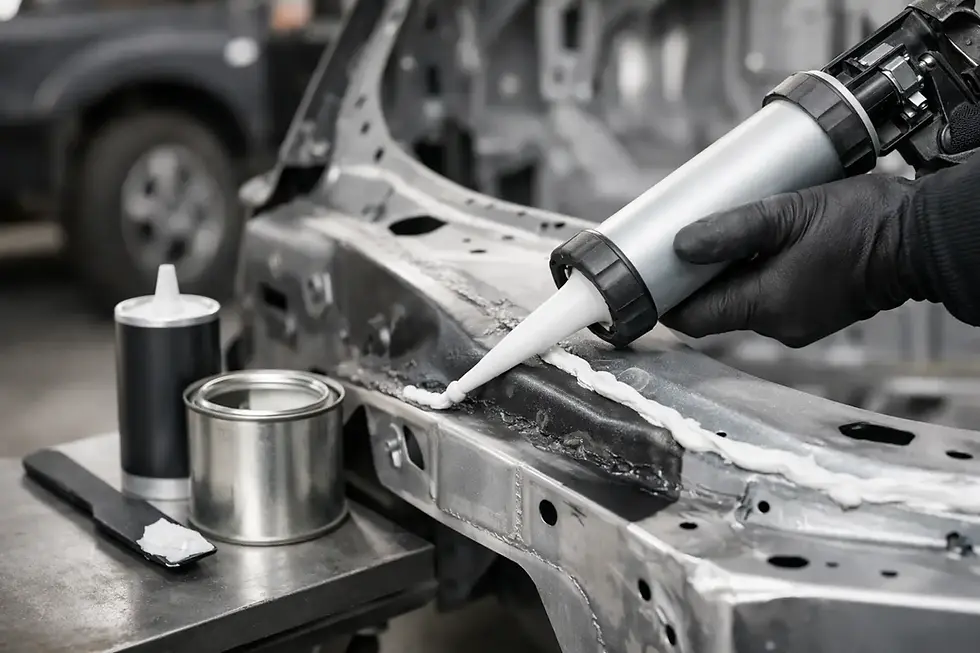
Closed sections need another approach entirely. Frame interiors, rockers, doors, quarter panels, and other cavities benefit from internal frame coatings and cavity waxes that can creep into seams and protect metal you cannot directly reach with a brush. These products matter because many rust failures begin inside enclosed spaces where hard coatings are difficult to apply evenly.
Automotive rust prevention guide for common problem areas
Frames are a priority, especially on trucks and older body-on-frame vehicles. Rust often starts inside the rails where moisture enters through factory holes and drainage points. If the outside of the frame looks decent but the inside has never been treated, internal protection should move up your list fast. https://www.eastwoodcanada.com/product-page/rust-remover-pint-eastwood-gel-rust-dissolver-12096-quart?currency=CAD
Floor pans and trunks usually suffer from trapped moisture, leaking seals, or wet carpet padding. These areas need more than a cosmetic topcoat. Remove the source of water first, then treat the metal and seal it with a system built for enclosed or semi-enclosed areas.
Wheel wells and lower body sections take constant abuse from stones and road salt. Chip-resistant coatings help, but they only work if the substrate underneath is stable. If rust is already pushing paint off from behind, stop and address the corrosion first.
Door bottoms, rocker panels, and cab corners are classic cavity problems. Drain holes clog, moisture builds, and corrosion works from the inside. A cavity wax applied after cleaning and repair is one of the most effective preventive steps for these sections.
Timing matters more than most owners think
Many people wait until they see obvious rust. That is late. The best time to protect a vehicle is when the metal is still clean, or when early surface corrosion is just starting and can still be controlled without major repair.
Season matters too. If you live where roads are salted, apply or refresh protection before winter, not after the damage is done. Spring inspections also make sense because they show you what survived the season and what needs attention before humidity and rain keep the cycle going.
There is also a difference between a show build and a working truck. A restoration project may justify stripping parts, coating both sides of panels, and using a more complete paint and primer system. A driver or fleet vehicle may need a practical maintenance approach focused on underbody cleaning, cavity treatment, and targeted spot repair. Both can be effective if the product choice matches the use case.
Maintenance is part of rust prevention
No coating should give you the idea that the job is finished forever. Vehicles live in harsh conditions, and even good systems need inspection. Wash the underbody, especially after winter driving. Check for chips, abrasion, and missed spots. Reapply cavity protection as needed and keep drain paths clear. https://www.eastwoodcanada.com/product-page/eastwood-canada-rust-converter-aerosol-51483z?currency=CAD
This is where a specialized supplier earns its place. Having access to rust treatments, chassis coatings, cavity waxes, abrasives, primers, spray tools, and shop equipment in one lineup makes it easier to build a complete system instead of mixing random products and hoping they cooperate. For Canadian restorers and builders, Eastwood Canada is positioned around exactly that kind of task-focused workflow.
If you are serious about preserving a vehicle, think like corrosion never takes a day off, because it does not. The smartest move is to catch metal early, prep it properly, and use the right protection in the right place before rust turns a manageable job into a major rebuild.


Comments