
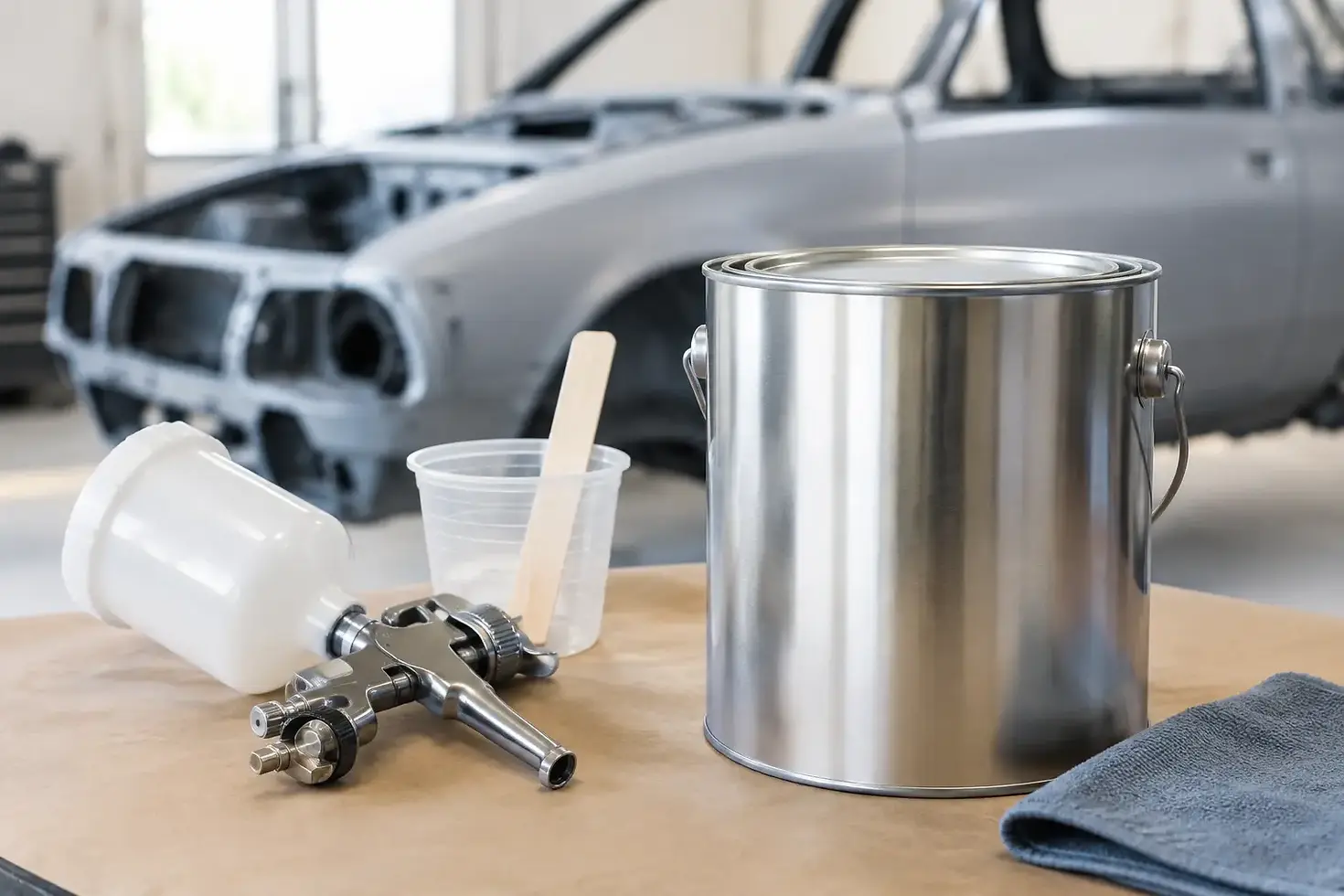
Choosing an Epoxy Primer Automotive Gallon

A full respray can make a quart kit disappear faster than expected. When you are sealing a stripped body, coating replacement panels, or priming a frame and underside, an epoxy primer automotive gallon can be the smarter buy - provided you have the project scope, spray equipment, and workspace to use it properly.
Epoxy primer is not a filler primer meant to bury sanding scratches. Its job is to create a tough, corrosion-resistant foundation over properly prepared metal and compatible existing finishes. Buying it by the gallon gives builders and shop owners enough material to keep a large restoration moving without changing products or hoping a small kit stretches farther than it should.
When an Epoxy Primer Automotive Gallon Makes Sense
A gallon is usually the right size for a complete vehicle project, several panels, or a combination of body, engine bay, core support, floor sections, and chassis components. It also makes sense when you are restoring more than one vehicle and want one proven coating system on the shelf.
The key question is not simply, “How big is the car?” It is how much surface you intend to spray. A cab, bed, doors, hood, fenders, underside, and inner structure add up quickly. Rust repair adds even more surface area because patches, weld areas, brackets, and the backs of panels all need protection before final assembly.
A gallon may be excessive for one bumper repair, a pair of small fenders, or a single patch panel. In those cases, a smaller kit reduces the chance of material sitting unused beyond its shelf-life window. But for a bare-metal restoration, buying too little is often more expensive in the long run. You may need another shipment, lose time, or end up with a different batch or product line halfway through the job.
Know What “One Gallon” Actually Means
Do not assume a gallon kit always produces one sprayable gallon. Automotive epoxy primers are commonly sold as a primer component plus a catalyst or activator, and the mix ratio determines the final volume. Some systems are mixed 1:1, while others use different ratios. Certain products may also allow a specified amount of reducer for improved flow or use as a sealer.
Read the product technical data before ordering and before mixing. That document tells you the mix ratio, induction time if required, pot life, recommended tip size, spray pressure, recoat window, film build, and compatible topcoats. Those details are not fine print. They determine whether the primer sprays correctly and whether the paint system holds up years after the job leaves the garage.
Coverage figures also need context. A stated coverage rate is typically based on ideal application conditions and a specific dry-film thickness. Real-world projects include overlap, panel edges, complex shapes, spray loss, test patterns, and material left in the cup, hose, and gun. Plan for waste rather than calculating only the flat square footage of the exterior body panels.
Where Epoxy Primer Earns Its Place
Epoxy primer is commonly used over clean bare steel, aluminum, fiberglass, and properly sanded existing finishes when the coating system approves those substrates. It is especially valuable after blasting or stripping because fresh metal can flash-rust quickly in humid conditions. The primer seals the surface and gives the project a stable stopping point while bodywork and panel fitting continue.
For restoration work, epoxy is a practical first coating on replacement metal, repaired floors, inner fenders, firewall areas, trunk floors, and engine compartments. It can also be used on the back sides of panels before installation, where future access will be limited. That is where a coating decision made early can prevent a corrosion problem that is expensive to correct later.
Epoxy is not automatically the final answer for every surface. If you need to level weld seams, minor dents, or coarse sanding marks, a high-build primer surfacer is generally the next stage after the epoxy has cured or been recoated within its approved window. If a panel needs body filler, follow the coating system instructions for whether filler belongs on bare metal or over cured epoxy. There is no universal rule that replaces the product sheet.
Surface Preparation Decides the Result
The best epoxy primer cannot compensate for contamination, loose rust, or glossy paint that was never sanded. Start by removing grease, silicone, wax, sanding residue, and blasting dust with the appropriate surface cleaner. Use clean towels and change them often. Wiping contamination around with a dirty rag is a quick way to create adhesion issues and fish eyes.
Bare metal should be clean, dry, and prepared to the profile specified by the primer manufacturer. If the vehicle was media blasted, blow out seams, braces, and pinch welds thoroughly. Abrasive can keep falling from hidden areas long after the body appears clean, and those particles can ruin a fresh coating.
Mask carefully, including bolt holes, threaded areas, body lines, and parts that will later need electrical grounding. Primer on threads creates assembly headaches. Primer trapped in panel gaps can chip when parts are bolted together. Good masking is not glamorous work, but it saves time when the vehicle starts going back together.
Plan the Mix, Not Just the Purchase
A gallon purchase does not mean you should activate a gallon at once. Once epoxy primer and catalyst are mixed, the clock starts. Pot life changes with product chemistry and shop temperature, but any mixed material that cures in the cup is wasted material.
Measure only what you can spray within the listed pot life. Use graduated mixing cups, stir each component thoroughly before combining, and keep the container sealed when it is not in use. If the system requires an induction period, let it sit for the stated time before spraying. Skipping that step because the primer looks mixed can affect how it lays down and cures.
Temperature matters as well. Cold panels and cold material can lead to poor flow, slow curing, or moisture problems. Excessive heat shortens working time and can make dry spray more likely. A controlled shop environment, clean compressed air, and a properly set spray gun do more for the finish than trying to force a coating to work outside its recommended conditions.
Build a Coating System, Not a Random Stack
Epoxy primer performs best as part of a compatible system. Before spraying, decide what follows it: filler, seam sealer, high-build primer, single-stage topcoat, basecoat-clearcoat, chassis coating, or underbody protection. Each layer has a required preparation method and recoat window.
For example, spraying a primer surfacer within the epoxy’s open recoat period may allow a direct chemical bond. Waiting beyond that window can mean scuffing or sanding the epoxy before applying the next product. Neither approach is difficult when planned, but both become frustrating if the project sits for weeks and the next step was never considered.
This is also where buying restoration-grade materials from a supplier that understands the full workflow pays off. Eastwood Canada focuses on the products builders use from metal repair through final finishing, not just a single can on a shelf.
Spray Safety Is Part of the Job
Two-component coatings demand proper personal protection and ventilation. Use the respirator and cartridges specified for the coating, wear gloves and eye protection, and follow all label and safety data requirements. A basic dust mask is not adequate for sprayed catalyzed coatings.
Keep ignition sources away from the spray area, manage overspray, and provide fresh-air movement without blowing dirt across the panel. If your workspace cannot safely support spraying, consider preparing the metal yourself and having a qualified paint facility apply the coating. Protecting the work is important. Protecting the person doing it comes first.
A gallon of epoxy primer is a commitment to doing the foundation work right. Estimate the full surface area, buy for realistic spray loss, and keep every layer of the finish system compatible. Then mix only what the day’s work requires, get the metal sealed, and give the project a solid base for the miles and seasons ahead.


Comments