

Choosing Auto Refinishing Products
- ERIC GIROUX
- Jun 16
- 6 min read

A paint job usually fails long before the color goes on. It starts with the wrong filler over bare metal, cheap masking that lifts at the edge, primer that does not match the substrate, or a topcoat sprayed over a surface that was never fully cleaned. That is why auto refinishing products matter so much. The finish you see at the end is only as good as the system underneath it.
For restoration work, collision repair, and custom paint projects, the goal is not just shine. It is adhesion, corrosion resistance, surface stability, and repeatable results. Whether you are repainting a fender, correcting rust on a floor pan, or finishing a full project car, choosing products by task instead of by price alone usually saves time, material, and rework.
What auto refinishing products actually include
A lot of buyers think first about paint, but the category is much broader than color coats and clear. Auto refinishing products cover every stage of surface correction and coating. That includes cleaners and degreasers, rust treatment, body filler, glazing putty, primers, seam sealers, masking materials, basecoat systems, single-stage paint, clear coats, reducers, activators, abrasives, polishing compounds, and spray equipment.
In practical terms, refinishing is a chain. If one link is weak, the whole job can suffer. A strong clear coat will not fix poor panel prep. A premium primer cannot compensate for wax and grease left on the surface. Good materials work best when they are used as part of a compatible process.
Start with the substrate, not the paint rack
The smartest way to choose auto refinishing products is to identify what you are spraying or repairing. Bare steel, aluminum, existing paint, body filler, fiberglass, and plastic all behave differently. That affects what you should use first and what should go on top.
Bare metal usually needs immediate protection. If the panel is clean and properly sanded, epoxy primer is often the right move because it gives strong adhesion and helps seal the surface from moisture. If you are trying to level sanding marks or minor imperfections after that, a 2K primer surfacer makes more sense than piling on extra coats of epoxy.
Previously painted panels can be simpler, but only if the existing finish is stable. If the old coating is peeling, checking, or reacting with solvents, sanding and spot repair may not be enough. In those cases, stripping back farther and rebuilding the surface saves headaches later.
Plastic parts add another variable. Flex characteristics and adhesion requirements are different from steel body panels, so plastic-specific prep and adhesion promoters often matter. Skipping that step can leave you with paint that looks fine in the booth and fails in service.
Prep products do more work than most people think
Most finish problems are prep problems wearing a paint problem mask. Fish eyes, lifting, dieback, edge mapping, and poor gloss retention often trace back to contamination or poor surface prep.
That makes cleaners, abrasives, and masking supplies just as important as primers and topcoats. Wax and grease remover should be chosen and used correctly, with clean towels and proper wipe-off technique rather than smearing contaminants around the panel. Sandpaper grit should match the stage of work. Too coarse, and scratches print through. Too fine, and you may lose the mechanical bite needed for adhesion.
Masking is another place where quality shows. Cheap tape can bleed, lift, or leave residue. Low-grade paper can let solvents soak through. On a full respray or a detailed repair, those shortcuts rarely stay cheap for long.
Primer, filler, and sealer each have a separate job
One of the most common buying mistakes is expecting a single product to handle every problem. In reality, body filler, primer surfacer, epoxy primer, and sealer each do different work.
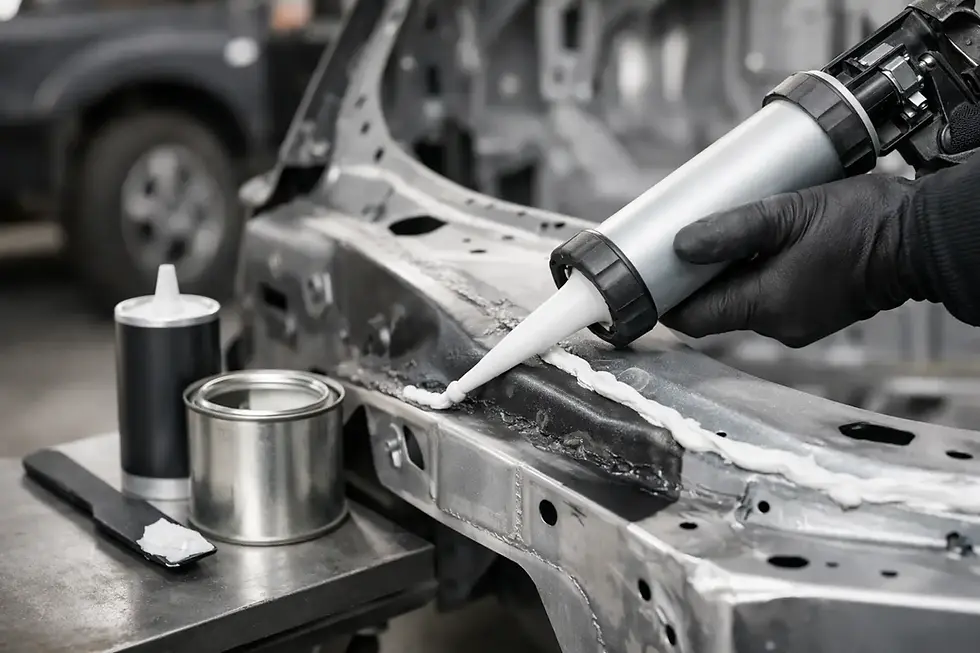
Body filler is for shaping and correcting uneven surfaces. It is not a substitute for proper metal finishing, but it helps bring a panel back into line. Glazing putty handles smaller imperfections after filler work. Primer surfacer builds film thickness so you can block sand the panel straight. Epoxy primer bonds well and helps protect metal. Sealer creates a consistent surface before color, especially when you have multiple substrates or repairs showing through.
It depends on the job, but stacking the right products in the right order usually matters more than buying the most expensive version of one item. A straight panel with a compatible primer system will generally outperform a rushed repair with premium topcoat materials.
Paint systems: match the finish to the project
Not every vehicle needs the same paint approach. A driver-quality repair, a race car, a weekend cruiser, and a high-end restoration can all justify different material choices.
Basecoat-clearcoat systems are popular because they give depth, repair flexibility, and strong gloss when applied correctly. They are a common fit for modern finishes and custom work. Single-stage paint can still make sense for certain restorations, budget-conscious projects, engine bays, chassis parts, or applications where simplicity matters more than layered depth.
The right choice depends on the desired look, the original vehicle finish, the amount of exposure the vehicle will see, and how much labor you want to invest in correction and polishing. Some painters prefer the control of a basecoat-clearcoat setup. Others want the directness of a single-stage system. Neither is automatically better in every case.
Rust repair products are part of refinishing, not a separate issue
If you work on older vehicles, trucks, or anything driven in wet climates, rust is not a side task. It is part of the refinishing process. Painting over corrosion without treating it properly is one of the fastest ways to waste time and materials.
Rust repair can involve mechanical removal, chemical treatment, encapsulating coatings, patch panels, seam sealer, and underbody protection depending on severity. Surface rust on a bracket is one thing. Rust-through at a rocker, wheel opening, or floor section is something else entirely.
The key is honesty. If the metal is compromised, refinishing products alone will not restore structure. But when corrosion is addressed correctly, the right coatings help protect repairs and extend the life of the work. This is where a restoration-focused supplier earns its place by offering products built around the actual sequence of repair rather than generic paint shelf options.
Equipment matters because products only perform when applied correctly
Even the best materials can disappoint with poor spray setup. Gun quality, tip size, air supply, water control, mixing accuracy, and shop temperature all affect the result. When buyers blame the paint, the issue is sometimes application.
A high-build primer needs enough fluid delivery to lay down properly. A clear coat needs the right atomization and overlap to avoid dry spray or runs. Moisture in the airline can ruin a finish fast. So when you are budgeting for auto refinishing products, it is worth thinking beyond coatings and including the tools and support items that help those coatings work the way they were designed to work.
For a hobbyist, that may mean improving filtration and stepping up to better spray accessories. For an independent shop, it may mean standardizing on a paint process that reduces variables from job to job.
Buying by system usually beats buying piece by piece
There is always a temptation to mix whatever is already on the shelf with whatever is cheapest this week. Sometimes that works. Sometimes it creates compatibility problems that are hard to diagnose once the panel is painted.
Staying within a proven system is usually the safer route, especially for primers, activators, reducers, and topcoats. Product data matters. Flash times matter. Recoat windows matter. If a primer calls for a certain cure time before sanding or topcoating, ignoring that can cost far more than the time saved.
This is also where specialized suppliers have an advantage. A catalog built around restoration and refinishing tasks helps you source the full workflow in one place, from abrasives and masking to primers, paint systems, and rust protection. Eastwood Canada is positioned for exactly that kind of buyer - someone who wants restoration-grade materials without sorting through a generic auto parts inventory.
How to choose the right auto refinishing products for your job
If you are narrowing down what to buy, start with the repair scope. Are you doing a spot repair, a complete panel, a jamb, an underhood area, or a full respray? Then consider the substrate, the finish expectation, and the environment the vehicle will live in.
A weekend project truck that sees weather may need a different product mix than a garage-kept show car. A quick cosmetic improvement may not justify the same material stack as a long-term restoration. There is no universal perfect cart. The best setup is the one that fits the metal, the finish target, and the way the vehicle will actually be used.
That is the practical mindset to keep all the way through the job. Buy for the process, not the label. When the prep is right, the products match the substrate, and the coating system is built with purpose, the final finish has a much better chance of lasting the way it should.
The best refinishing jobs rarely come from shortcuts. They come from choosing materials that work together and treating every layer like it matters, because it does.


Comments