
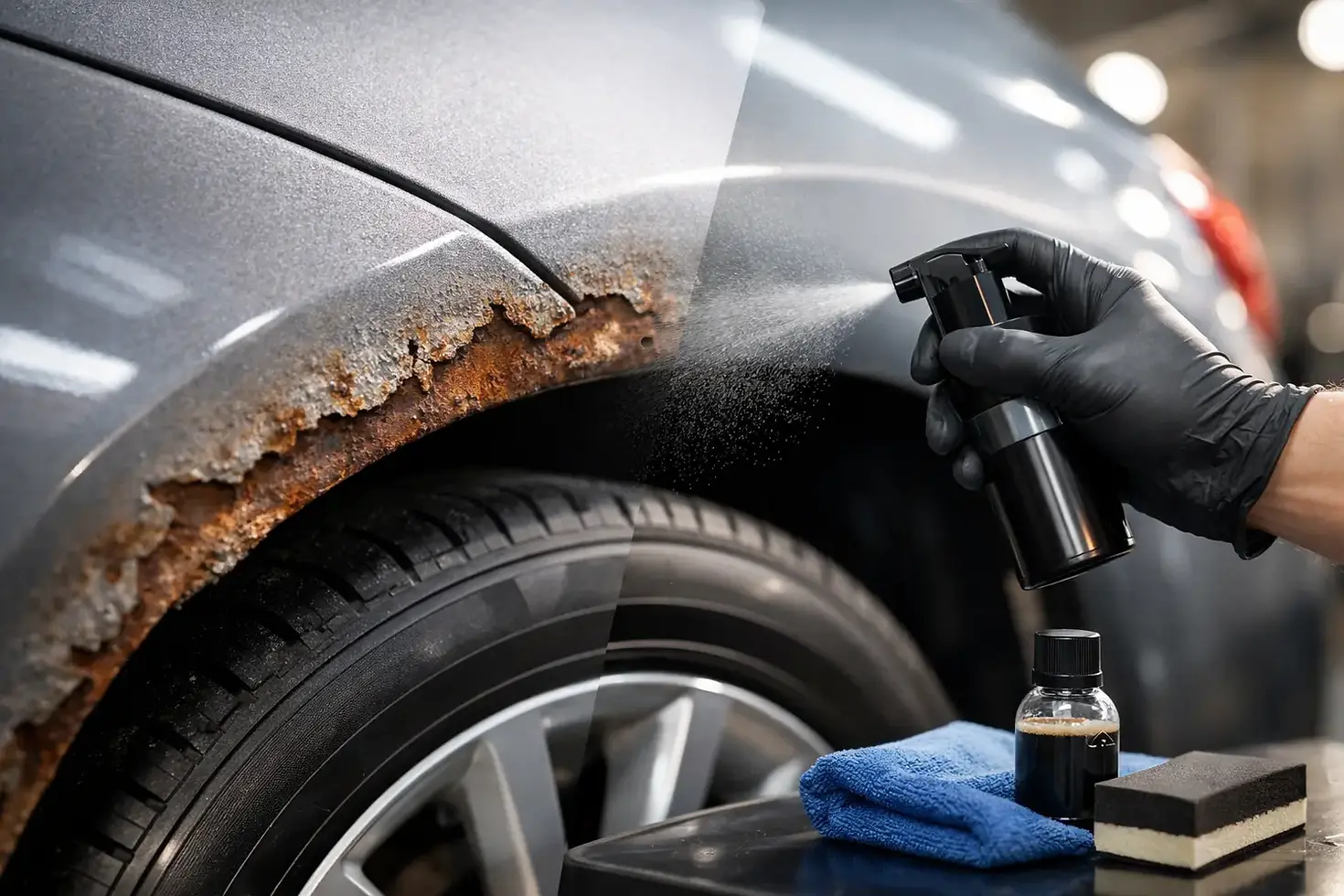
How Can Rust Be Prevented on Cars?

A clean paint job can hide a problem for a while, but rust always shows up where prep was skipped, moisture got trapped, or bare metal was left exposed too long. If you're asking how can rust be prevented, the real answer is this: keep oxygen, water, salt, and contamination away from steel, and use the right coating system before corrosion gets a foothold.
That sounds simple, but in the shop it comes down to process. Rust prevention is less about one miracle product and more about doing each step correctly, especially on floor pans, rocker panels, frames, suspension parts, wheel wells, and any seam that sees road spray.
What actually causes automotive rust
Rust forms when iron and steel react with oxygen and moisture. Add road salt, trapped mud, or chipped paint, and that reaction speeds up fast. That's why a vehicle can look solid on top but be failing underneath, inside boxed sections, or around spot-welded seams.
In restoration work, the usual trouble spots are predictable. Stone chips on lower panels expose metal. Condensation builds inside doors and quarter panels. Old seam sealer cracks and lets moisture creep underneath. Undercarriages take constant abuse from water, brine, and debris. Even freshly blasted metal can start flash rusting if it sits too long in humid air.
The key point is that rust prevention starts before visible rust appears. Once corrosion has expanded under paint or into layered metal, prevention becomes repair.
How can rust be prevented before it starts?
The best prevention plan combines surface prep, the right primer or encapsulating coating, solid topcoats, and ongoing maintenance. Miss one of those, and the whole system gets weaker.
Surface prep is where most results are won or lost. Metal needs to be clean, dry, and stable before any coating goes on. That means removing grease, wax, sanding residue, and corrosion. If rust remains active under a coating, it can continue spreading. If the surface is contaminated, even a quality coating can lose adhesion.
On bare steel, timing matters. After blasting or aggressive sanding, metal should be treated and coated quickly. Waiting too long in a damp garage can undo your prep work.
Start with removal or stabilization
https://www.eastwoodcanada.com/product-page/51128zp-eastwood-canada-black-epoxy-primer-and-catalyst?currency=CAD
There is a difference between light surface oxidation and heavy scale. Light rust can often be sanded, blasted, or chemically treated back to sound metal. Heavier corrosion may need grinding, cutting, or replacement. Trying to coat over flaky rust usually saves time only in the short term.
For areas where complete removal isn't practical, a rust converter or rust encapsulating product can help stabilize the surface. That said, these products are not a substitute for proper prep. Loose material still has to come off, and the coating needs a firm surface to bond to.
Use a coating system, not a single layer
A proper rust prevention setup usually includes a metal prep stage, a primer or encapsulator, and a topcoat suited to the environment. On chassis parts and underbody sections, durability matters as much as appearance. On exterior panels, corrosion protection has to work with your paint system. https://www.eastwoodcanada.com/product-page/51128zp-eastwood-canada-black-epoxy-primer-and-catalyst?currency=CAD
Epoxy primers are a strong choice for bare metal because they seal well and provide an excellent foundation for later coatings. Rust encapsulators are often used on frames, floor pans, and underside components where long-term sealing is the main goal. Topcoats add UV resistance, impact resistance, and another barrier against moisture.
This is where product matching matters. Some coatings are built for direct-to-metal use, others are not. Some need a specific recoat window. Some are better for hidden areas, while others are meant for visible finished surfaces. Read the system requirements before you open the can.
The areas most people miss
Rust doesn't just start on the obvious panels. It starts where water sits, where air can't circulate, and where factory protection has broken down.
Inside cavities are a major example. Doors, rocker panels, frame rails, quarter panels, and other enclosed sections can hold moisture for months. A vehicle may look protected outside while corrosion is building from the inside. Cavity waxes and internal frame coatings are designed for these spaces because they creep into seams and leave behind a protective film.
Seams and welds are another weak point. Fresh welds need immediate protection because heat removes existing coatings and can leave bare steel exposed in tight, hard-to-reach areas. Seam sealer should be applied where panels overlap or where factory seams were disturbed, then covered with the correct coating.
Fasteners, brackets, and suspension hardware also get overlooked. These small parts see water and salt constantly. If you're restoring a chassis or underbody, protecting the supporting hardware makes the whole job last longer. https://www.eastwoodcanada.com/search?currency=CAD&q=seam+sealer
Why undercoating helps - and when it doesn't
Undercoating can be a very effective part of rust prevention, especially in climates with wet roads, gravel, and salt. It adds a physical barrier against impact and moisture, which matters on wheel wells, floor pans, and lower sections that get hammered by road debris.
But undercoating is only as good as what's underneath it. Applying it over wet surfaces, active rust, or loose scale can trap the problem instead of solving it. That's why prep comes first. Clean the area thoroughly, repair damage, stabilize any corrosion, and then apply the coating system.
There is also a difference between rubberized coatings, wax-based corrosion inhibitors, and harder chassis coatings. Each has a place. A flexible underbody product can absorb impact well, while a chassis coating may offer a cleaner finished look and better chemical resistance. For enclosed cavities, a creeping wax product often makes more sense than a thicker coating.
Maintenance is part of prevention
If you use the vehicle, rust prevention is never completely finished. Good coatings buy time, but regular inspection is what keeps small damage from turning into structural corrosion.
Wash the underside after winter driving, especially if your roads are treated. Clear out packed dirt from wheel wells and lower body seams. Check drain holes in doors and rockers so water can escape. Touch up stone chips before they reach bare metal. If you're storing a project vehicle, keep it dry and avoid trapping humidity under a cover.
Garage conditions matter too. A damp shop can work against you, especially during metal prep and coating cure times. Temperature swings create condensation on bare steel and inside panels. If you're doing restoration work in stages, protect exposed areas between steps instead of assuming you'll get back to them tomorrow.
How can rust be prevented on restorations versus daily drivers?
The approach changes a bit depending on the vehicle.
On a restoration, you usually have better access and more control. That gives you the chance to strip problem areas fully, treat hidden sections, reseal seams, and build a complete coating system from the metal up. It takes more time, but it also gives longer-lasting results.
On a daily driver, the priority is often stopping corrosion from spreading without taking the whole vehicle apart. That may mean focused repairs, underbody treatment, cavity protection, and regular touch-up work. You might not restore every panel to bare metal, but you can still slow deterioration significantly if you address trouble spots early.
The trade-off is cost and access. A full restoration-grade process delivers the best protection, but a practical maintenance plan is far better than ignoring the problem until metal replacement is the only option.
Choosing the right rust prevention products
For automotive work, look at products by job, not by hype. You need cleaners and degreasers for prep, abrasives or blasting media for removal, rust treatment products for stabilization, epoxy or direct-to-metal coatings for sealing, seam sealer for overlaps, cavity wax for enclosed sections, and durable topcoats or underbody coatings for exposed impact areas. https://www.eastwoodcanada.com/product-page/kbscoating-cavity-coater-wax-and-corrosion-inhibiting-coating-75100?currency=CAD
If you're working across a whole vehicle, using compatible products from a restoration-focused supplier makes the process easier. Eastwood Canada carries rust treatment, coating, and refinishing products built around that workflow, which matters when you're trying to move from prep to protection without guessing your way through the system.
What you don't want is mixing random products with unclear compatibility, then finding out the topcoat lifts, the primer doesn't bond, or the hidden sections never got protected at all.
The real answer to long-term rust prevention
https://www.eastwoodcanada.com/rust-system?currency=CAD
Rust prevention is not about making metal invincible. It's about reducing exposure, sealing vulnerable surfaces, and fixing damage before corrosion gets established. The best results come from consistent habits - proper prep, the correct coating system, attention to hidden areas, and periodic inspection once the vehicle is back on the road.
If you treat rust prevention like part of the build instead of an afterthought, your paint, chassis, and sheet metal all have a better chance of holding up the way they should.


Comments