

How to Choose Auto Body Products
- ERIC GIROUX
- Jun 17
- 6 min read

One bad product choice can cost you a full weekend in the shop. Use the wrong filler under a repair, grab a primer that does not match the topcoat system, or cheap out on abrasives, and the job usually tells on itself later. That is why auto body products are not just supplies on a shelf. They are a system, and the quality of each step affects the finish, durability, and time you spend fixing problems you thought were already handled.
For restoration work, collision repair, and custom builds, the right product mix depends on what you are trying to do, what condition the metal is in, and how far you want to take the finish. A quick driver-quality repair needs a different approach than a full repaint on a classic car. The mistake many builders make is buying by label alone instead of matching products to the job. https://www.eastwoodcanada.com/?currency=CAD
What auto body products actually need to do
At a basic level, auto body products handle five jobs. They remove damage, stop corrosion, rebuild surfaces, create a paint-ready foundation, and protect the finished work. If one of those jobs is skipped or handled with the wrong material, the whole repair becomes less reliable.
That matters most in rust-prone areas, older vehicles, and any project where previous work is unknown. A panel that looks solid can still hide contamination, old filler, or scale under the coating. Good products help you expose what is really there, correct it properly, and build the surface back in the right order.
Auto body products by repair stage
Surface cleaning and prep
https://www.eastwoodcanada.com/search?currency=CAD&q=prep
Before filler, primer, or paint, the panel needs to be clean. That sounds obvious, but surface prep is where a lot of failures begin. Wax and grease removers, degreasers, prep solvents, and clean shop towels are not glamorous purchases, but they are essential. If oil, silicone, sanding dust, or residue stays on the panel, adhesion problems show up fast.
This is also where abrasives matter more than many people think. Sandpaper, stripping discs, flap wheels, surface conditioning tools, and blasting media all have different jobs. Coarse grits remove material quickly, but they can also leave scratches that need to be managed before primer. Finer grits improve finish quality, but they slow down heavy removal work. The right choice depends on whether you are stripping paint, feathering an edge, smoothing filler, or final sanding before sealer.
Rust treatment and corrosion control
https://www.eastwoodcanada.com/rust-system?currency=CAD
If the vehicle has rust, this category is non-negotiable. Rust converters, encapsulators, cavity coatings, internal frame treatments, and underbody protection products exist for different conditions. Some are made to stabilize light surface corrosion. Others are designed to coat cleaned metal and keep moisture out of seams, boxed sections, and undersides.
The trade-off is simple. Rust treatment products can help preserve hard-to-reach areas and slow future corrosion, but they are not a substitute for cutting out bad metal when the panel is structurally compromised. If rust has gone through, coatings alone will not turn weak steel into sound steel. Serious corrosion still needs proper metal repair.
Fillers and metal repair materials
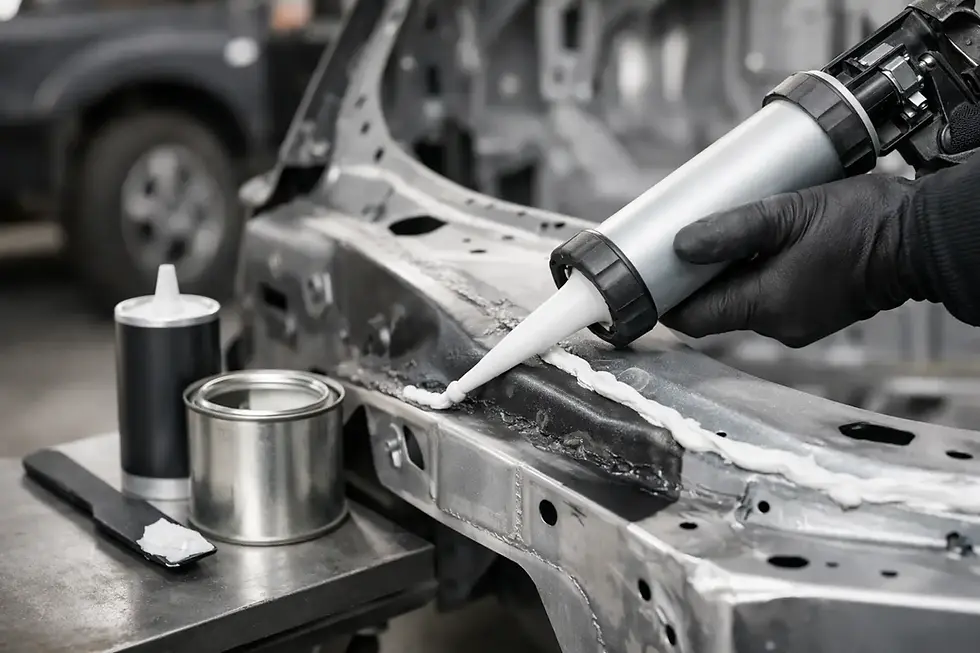
Body filler, glazing putty, fiberglass-reinforced filler, panel adhesives, and seam sealers all fall into the rebuild stage. Standard body filler is useful for shaping minor low spots over correctly prepared metal. Reinforced fillers are better where extra strength is needed or where welded areas need support. Glazing products handle pinholes and final minor imperfections.
This is one of the biggest it depends categories in the shop. Some builders use filler too thick because they do not want to spend more time on metal finishing. Others avoid filler entirely and create more work than necessary. The better approach is balance. Get the metal as straight as practical, then use the right filler product in thin, controlled applications.
Primers, sealers, and paint foundations
https://www.eastwoodcanada.com/primer?currency=CAD
Primer does more than cover bare metal. Depending on the product, it can provide corrosion resistance, filling capability, adhesion, or a stable substrate for topcoat. Epoxy primer is often the choice for bare metal because it offers strong adhesion and corrosion protection. High-build primer helps level sanding scratches and small imperfections. Sealer creates a uniform surface before color.
The key here is compatibility. Not every primer plays well with every topcoat system, reducer, or activator. That is why experienced builders think in product families instead of one-off cans. When your primer, sealer, and paint are designed to work together, you reduce the guesswork and lower the chance of lifting, solvent reaction, or adhesion failure.
Paint, coatings, and final finish products
Single-stage paints, basecoat-clearcoat systems, chassis coatings, underhood finishes, wheel paints, trim coatings, and specialty finishes all serve different goals. A show-oriented build might justify a full multi-stage paint system with careful cut and buff work. A driver restoration may be better served by a durable, simpler finish that is easier to maintain and repair.
This is where customers often overspend in the wrong place. They focus on color and gloss, but the finish only looks as good as the prep underneath. Premium paint over poor prep still produces a poor result. Good coating products matter, but they perform best when the earlier steps were handled correctly.
How to choose the right auto body products for your project
https://www.eastwoodcanada.com/?currency=CAD
Start with the condition of the vehicle, not the look you want at the end. If the panel has rust, old repairs, seam issues, or unknown coatings, solve those first. A clean late-model fender and a fifty-year-old quarter panel should not be treated like the same job.
Next, decide whether this is spot repair, panel repair, partial refinish, or full restoration. That determines how much product depth you need. A small repair may need cleaner, abrasives, filler, primer, and a localized topcoat solution. A full project usually needs a complete workflow, including rust prevention materials for hidden areas, multiple sanding stages, and shop equipment that supports consistent results.
Then look at your working environment. Temperature, humidity, airflow, and compressor capacity all affect product performance. Some coatings are forgiving. Others are not. If your garage setup is limited, it makes sense to choose products that match real shop conditions rather than ideal booth conditions.
Where people go wrong
A common mistake is mixing random products because each one looked good on its own. Another is skipping technical instructions, especially recoat windows and surface prep requirements. Auto body work rewards process discipline. If a product says it needs full cure, a certain grit profile, or a compatible top layer, there is usually a reason.
Cheap tools create problems too. Low-quality spray equipment, weak abrasives, poor masking materials, and inconsistent air supply can make even good coatings look bad. The labor on body and paint work is expensive, even when it is your own time. It makes little sense to save a few dollars on supplies that directly affect the final result.
Building a product system instead of a shopping cart
The best buying approach is to think in stages. Cleaning, rust control, metal repair, filler, primer, paint, and protection should work together from start to finish. That is how experienced builders avoid compatibility problems and reduce rework.
For many enthusiasts and independent shops, the biggest advantage comes from buying from a supplier that understands restoration workflows, not just generic automotive maintenance. A catalog built around body repair, refinishing, corrosion control, fabrication, and garage improvement makes it easier to get the right combination of products the first time. That is especially useful when the project includes more than paint, such as welding repairs, underbody restoration, or coating the parts you do not want to revisit later.
Eastwood Canada serves that kind of buyer well because the product mix reflects real restoration work rather than general parts-counter shopping. When you can source abrasives, rust treatment, fillers, primers, coatings, and shop tools from one restoration-focused source, it is easier to keep the whole job moving.
The smart way to buy for better results
https://www.eastwoodcanada.com/?currency=CAD
If you want better outcomes from auto body products, buy for the repair stage, the substrate, and the finish standard you actually expect. Not every project needs the most expensive option, but every project does need products that match the task. Good prep products save paint problems. Good corrosion control saves future repairs. Good primers and coatings protect the hours you already put in.
The job usually looks easiest right before it starts. Once the sanding dust clears and the real condition of the metal shows up, product choice becomes a lot more serious. Pick materials that are made for restoration work, follow the system, and give each step the attention it deserves. Your future self will thank you the first time a finish still looks right seasons later.


Comments