
Is Powder Coating Durable on Vehicle Parts?

A freshly powder-coated control arm, wheel, bracket, or chassis part can look nearly indestructible. The real test begins when the part sees gravel, brake dust, road salt, heat cycles, spilled fluids, and the occasional wrench slip. So, is powder coating durable? Yes, when the coating system matches the part, the metal is prepared correctly, and the finished part is treated as a high-quality finish rather than armor plating.
For restoration work, powder coating is one of the toughest and most practical finishing options available. It creates a thick, bonded film that resists chips, chemicals, moisture, and everyday abrasion better than many conventional spray finishes. But it has limits, especially on parts that flex, see extreme heat, or need corrosion protection inside seams and boxed sections.
Is Powder Coating Durable for Automotive Use?
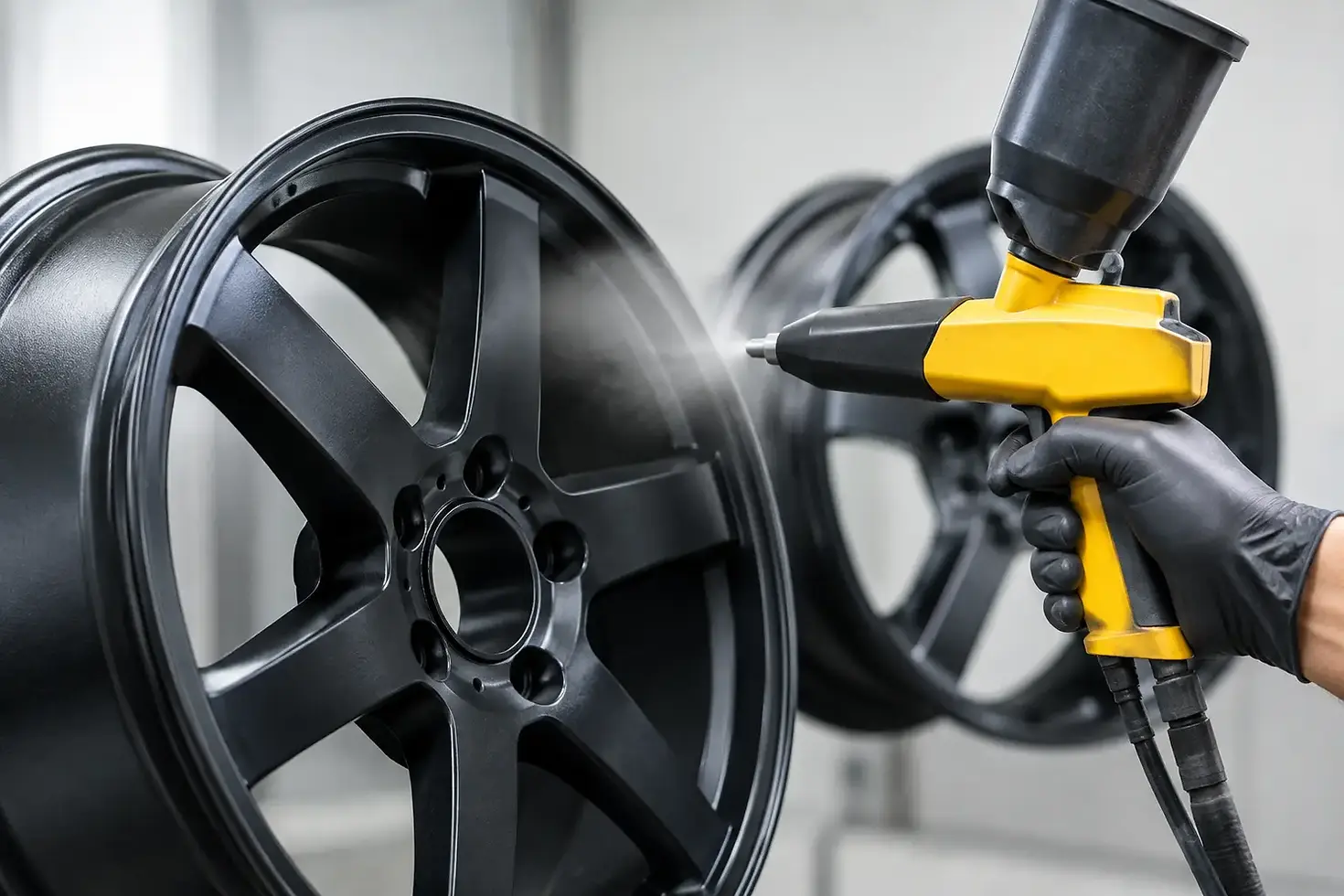
Powder coating is durable because the coating is applied as dry powder, then cured with heat until it melts and flows into a continuous film. Once cured, it forms a finish that is typically thicker than standard automotive paint and strongly bonded to properly prepared metal.
That thickness matters on parts exposed to road debris. A quality powder coat can hold up very well on suspension components, engine brackets, crossmembers, wheels, valve covers, bumpers, fabrication projects, shop fixtures, and many underhood parts. It also gives restorers a clean, uniform appearance that is difficult to achieve with a brush-on coating and more forgiving than spraying multiple coats of paint.
Durability is not one fixed number, though. A coated show-car axle that sees occasional fair-weather driving has an easy job. The same axle on a daily-driven truck in a northern winter faces salt brine, impacts, and repeated wet-dry cycles. The coating may be identical, but the service conditions are not.
What Powder Coating Resists Well
A properly cured powder-coated surface generally stands up well to ordinary shop and road abuse. It resists scuffing from routine handling, light impacts, many automotive fluids, and washing better than a basic single-stage paint job. The smooth, nonporous surface also makes grime and brake dust easier to clean off.
Powder coating is particularly useful where parts are regularly handled or exposed. Think pedal assemblies, sway bars, battery trays, seat brackets, transmission crossmembers, trailer components, and fabricated steel pieces. The finish has enough film build to provide a finished, substantial feel without requiring repeated spray applications.
Chemical resistance depends on the powder chemistry and cure. Fuel, oil, grease, mild cleaners, and road grime are usually not a major problem when they are cleaned off in a reasonable time. Strong solvents, brake cleaner, paint stripper, concentrated degreasers, and some specialty chemicals are different. Do not assume every powder coating will shrug off every chemical just because it is tougher than paint.
The Limits: Chips, Heat, and Hidden Rust
Powder coating can chip. A sharp rock strike on a wheel lip or lower control arm can break through even a well-applied finish. Because the coating is relatively thick, damage can sometimes chip at the edge instead of wearing away gradually. If bare steel is exposed, moisture can work under the surrounding film and start corrosion.
That is why prep and repair matter. Inspect high-impact areas during routine maintenance, especially on vehicles that see gravel roads or winter driving. A small chip is easier to address before corrosion creeps beyond the damaged spot.
Heat is another limitation. Standard powders are often a good fit for underhood parts and many chassis components, but exhaust manifolds, turbo housings, and other extreme-temperature parts require a coating designed for that temperature range. A standard powder may discolor, lose gloss, or fail when used where exhaust heat is concentrated. Match the product to the actual operating temperature, not just the fact that the part is near an engine.
Powder coating also cannot protect metal it cannot reach. A coating on the outside of a boxed frame section, rocker reinforcement, or welded seam does nothing for moisture trapped inside. On restored vehicles, use a complete corrosion-control plan that includes cleaning, seam sealing where appropriate, and treatment for enclosed cavities.
Surface Preparation Decides the Result
The best powder coating starts long before the powder gun is turned on. Most premature failures trace back to contamination, corrosion left in pits, poor blasting, or incomplete curing rather than a problem with the coating itself.
Bare steel should be thoroughly cleaned and blasted to create a uniform anchor profile. Old paint, grease, silicone, undercoating, and rust must be removed. Any contamination left in seams, threaded holes, or porous castings can cause fisheyes, pinholes, or adhesion problems once the part enters the oven.
Cast aluminum and cast iron deserve extra attention. These materials can release trapped oils and gases during curing, which may create bubbles or small craters in the finish. Pre-baking, proper cleaning, and using a powder system suited to the substrate can prevent many of these issues.
Masking is equally practical. Powder builds thickness, so threads, bearing bores, grounding points, brake mounting surfaces, and tight-fitting slip joints should be protected before coating. A durable finish is not useful if it creates assembly problems afterward.
Film Thickness Is Not Always Better
It is tempting to think a heavier coating automatically means better protection. Excessive film thickness can create poor edge coverage, reduce flexibility, hide details, and make chips more noticeable when damage occurs. The goal is an even, fully cured coat at the manufacturer’s recommended thickness.
Complex parts may need careful gun technique to avoid thin spots around sharp edges, recesses, and Faraday cage areas. Those are the places where moisture and chips tend to find a weakness first.
Choosing the Right Powder for the Job
Not all powders are intended for the same environment. Interior brackets and garage equipment may perform well with a basic finish, while wheels, outdoor chassis parts, and exterior accessories need stronger weathering and corrosion resistance.
For exterior automotive parts, look for a coating designed to resist UV exposure if the part will see sunlight. Some finishes can fade, chalk, or lose gloss over time, particularly bright colors and lower-grade powders. Black chassis components may hide this better than a bright-colored wheel or bumper, but the product selection still matters.
Texture also affects real-world performance. Smooth gloss finishes are easy to clean and show bodywork and metal imperfections clearly. Textured powders can disguise minor flaws and are popular for frames, bumpers, and shop equipment, though dirt can be harder to remove from a deep texture. Satin and semi-gloss finishes often offer a practical middle ground for restoration parts.
Eastwood Canada customers building a complete finish system should also consider how coated parts will meet painted panels, bare stainless hardware, polished aluminum, and rubber components. The right color and gloss level can make a restoration look intentional instead of pieced together.
Powder Coating vs. Paint for Restoration Parts
Powder coating is often the stronger choice for removable metal parts that can be fully cleaned, blasted, and oven cured. It is efficient for batches of brackets and hardware, and it provides a consistent finish that handles handling and road use well.
Paint still has an advantage on large assembled areas, parts that cannot fit in an oven, and components that need easy spot repair. A painted frame or body panel can be sanded and blended after damage. Powder-coated parts can be repaired, but matching texture and gloss may be more difficult, and a proper repair may require stripping and recoating the full part.
This is not an either-or decision for most builds. Many restorations use paint on body panels and large assemblies, powder coat on suspension and bolt-on pieces, and dedicated high-temperature finishes where heat demands them. Choosing by component is smarter than forcing one product type onto every surface.
Getting the Service Life You Expect
After coating, let the part cool completely and inspect it before assembly. Look closely at edges, welds, threaded areas, and recessed pockets. Use non-marring tools or protective tape when installing freshly finished parts, since careless assembly can damage even a durable coating.
Wash road salt and mud off regularly. Avoid aggressive solvent cleaners unless the powder manufacturer lists them as compatible. If a chip reaches bare metal, clean the area and address it promptly rather than waiting for a full restoration season. A durable finish lasts longest when small damage does not get the chance to become under-film corrosion.
Powder coating earns its reputation when it is used where it makes sense: clean metal, the correct powder chemistry, complete curing, and realistic expectations for the part’s environment. Build the finish around how the vehicle will be driven, and the coated parts will keep doing their job long after the first trip out of the garage.


Comments