
Powdercoat-Guns for Better Garage Finishes

A powder-coated bracket, wheel, suspension part, or engine accessory should look like it belongs on the vehicle for years, not just until the first heat cycle or road trip. That result starts well before the oven. Choosing between powdercoat-guns means matching the equipment to the parts you build, the space you have, and the level of finish control you expect.
For the home restorer, powder coating is one of the most practical ways to put a durable finish on small and medium metal parts. It eliminates spray-solvent concerns, gives you a wide range of colors and textures, and can produce a finish that holds up well against chips, chemicals, and regular handling. But the gun is only one piece of the system. Good grounding, clean preparation, suitable air supply, and proper curing all have a direct effect on the final result.
What Powdercoat Guns Actually Do
A powder coating gun electrostatically charges dry powder as it leaves the nozzle.https://www.eastwoodcanada.com/product-page/eastwood-hotcoat-40kv-powder-coating-system-at-eastwood-canada-74100?currency=CAD The grounded metal part attracts that charged powder, allowing it to cling to the surface before curing. Once the coated part reaches the powder manufacturer's specified metal temperature and cure time, the coating flows out and hardens into a continuous film.
That sounds straightforward, but the process has a few realities that matter in a garage. A gun needs to deliver powder consistently without surging. It needs enough adjustment to coat broad, open panels as well as tight corners and recessed areas. It also needs a dependable ground path. If the charge cannot travel through the part and back to ground, powder coverage will be uneven no matter how capable the gun may be.
Most automotive projects do not require a production-line setup. A well-chosen hobby or shop-grade system can handle valve covers, brackets, control arms, pedal assemblies, wheels, small chassis components, and fabricated parts with excellent results. The right choice depends on whether you need simple, repeatable coverage or more control for varied work.
Choosing Powdercoat-Guns for Your Work
The first question is not which gun has the most advertised power.https://www.eastwoodcanada.com/product-page/hotcoat-100kv-powder-coating-system-71860-eastwood-gtpracing?currency=CAD Ask what you will coat most often. A restorer finishing batches of small hardware and brackets has different needs from a fabricator coating tubular chassis parts, wheel centers, or custom intake components.
Voltage Control Matters More Than Big Numbers
Electrostatic output is often discussed in kilovolts, or kV. Higher voltage can help powder reach large, open surfaces efficiently, but it is not always better. High charge can create a Faraday cage effect in corners, channels, and deep recesses. Powder builds around the opening while the inside area remains thin or bare.
Adjustable voltage gives you a useful advantage. Use a stronger setting for open areas, then lower the output when working into corners, seams, and tight geometry. That control helps the powder enter difficult areas instead of repelling itself from them. For automotive restoration, where brackets and stamped steel parts often have folds, pockets, and mounting tabs, adjustment is far more useful than a single fixed setting.
Powder Feed and Cup Design Affect Consistency
A dependable powder feed keeps the coating pattern stable from the start of a part to the end. Entry-level guns commonly use a small hopper or cup, which is practical for color changes and modest jobs. Larger hoppers suit repeated production work but make cleanup and powder changes less convenient.
If you regularly switch from satin black brackets to bright wheel colors or textured underhood finishes, easy cleanup should carry real weight in your decision. Cross-contamination can show up quickly in a finished coating, especially with light colors or metallic powders. A system that is easy to clean is more likely to be used correctly.
Air Requirements Should Fit Your Compressor
Many powder guns run on low-pressure shop air, but clean, dry air still matters. Moisture and oil contamination can disrupt powder flow, cause clumping, and lead to an inconsistent spray pattern. Check the gun's required pressure and air consumption against what your compressor can supply continuously.
A large compressor is not automatically necessary for occasional coating, but a water separator and proper filtration are smart additions to any setup. If your shop air serves paint equipment, plasma cutters, and air tools, keep the powder coating air supply clean and regulated rather than relying on whatever comes through the main line.
The Gun Cannot Fix Poor Part Preparation
Powder coating hides less than many first-time users expect. https://www.eastwoodcanada.com/product-page/hotcoat-pcs-250-benchtop-booth-and-oven-powdercoating-kit-98274z?currency=CAD It can soften minor surface texture, but it will not make rust pits, oily fingerprints, welding scale, silicone contamination, or failing old paint disappear. The coating locks in whatever is underneath it.
Start with bare, clean metal. Strip previous coatings when necessary, remove rust completely, and use abrasive blasting or mechanical abrasion to create an appropriate surface profile. Follow with a thorough cleaning process that removes oil, blasting residue, and hand contamination. Handle prepared parts with clean gloves from that point forward.
Outgassing deserves special attention on cast aluminum and previously contaminated steel. Heat can release trapped oils or gases from the metal during curing, creating pinholes in the coating. Pre-baking porous or cast parts before coating can expose this problem before the finish goes on. Let the part cool, clean it again if needed, then coat it.
Grounding Is the Difference Between Coverage and Frustration
A clean ground connection is one of the least expensive improvements you can make to a powder coating setup. Attach the ground clamp directly to bare metal on the part or hanging fixture. Do not expect a clamp attached to a painted rack, rusty hook, or insulated work surface to provide consistent results.
The part must remain grounded while you spray it. If it is suspended from a hook, the hook needs clean metal-to-metal contact with both the part and the grounded rack. Heavy powder buildup on hooks can act as an insulator over time, so strip or replace them when they stop conducting well.
Poor grounding often looks like weak coverage, powder that falls away from the part, or stubborn bare areas in recesses. Before changing gun settings, inspect the ground path. This simple check solves more problems than many users realize.
Build a Practical Powder Coating Station
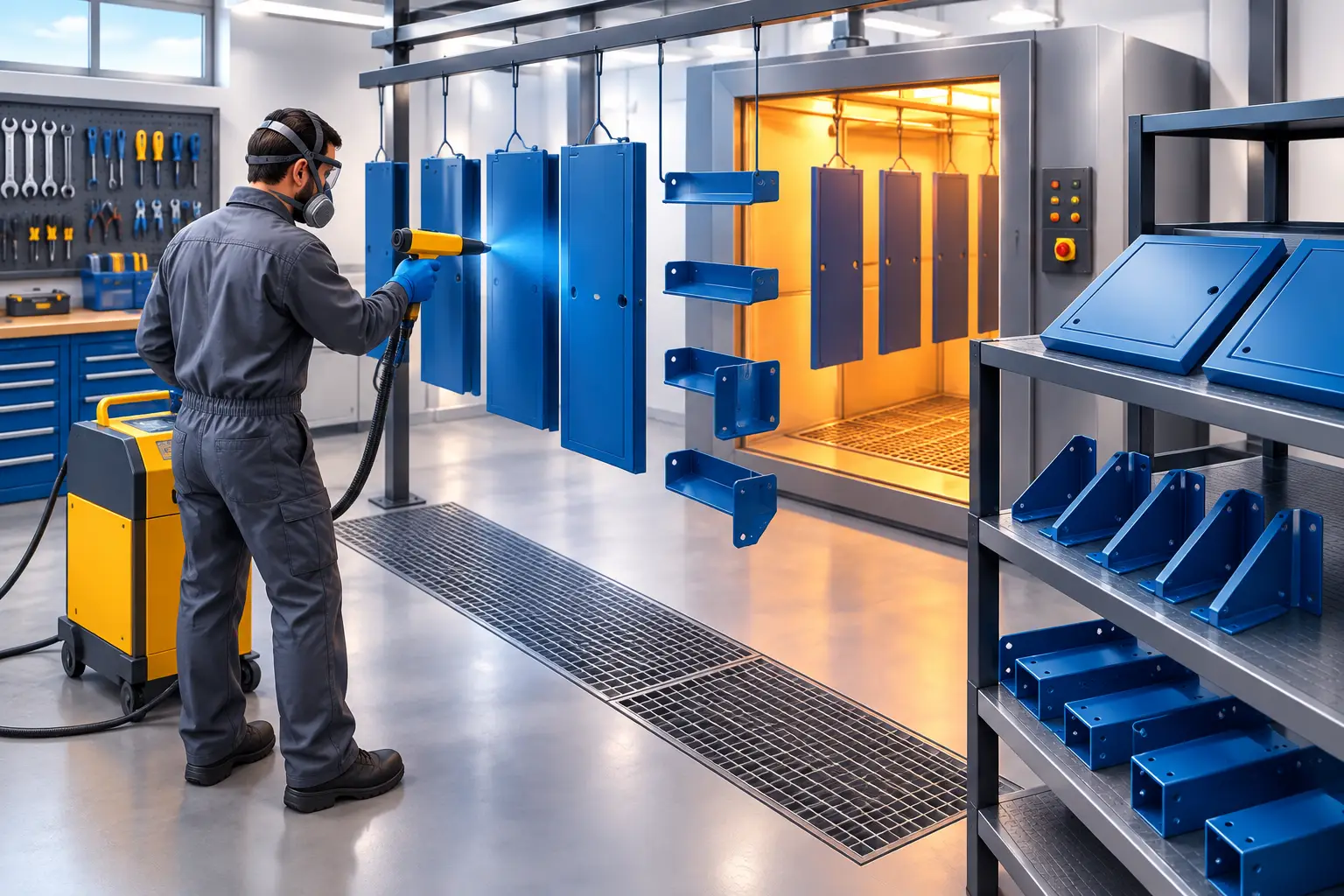
You do not need a commercial coating line to get professional-looking automotive parts, but you do need a controlled workflow. Keep the spray area clean and separate from grinding, welding, sanding, and solvent spraying. Airborne dust and shop debris can settle into uncured powder and show up permanently after baking.
A basic station should include a dedicated spray enclosure or booth, a grounded hanging rack, clean regulated air, a reliable curing oven sized for your typical parts, and safe storage for powders. Do not use an oven that will return to food preparation. Powder coating work can introduce residues and contaminants that do not belong in a kitchen appliance.
Lighting also matters. A dark spray area makes it hard to see thin coverage, especially with black, gray, or textured powders. Bright side lighting helps reveal whether the powder film is even around edges, inside corners, and behind mounting flanges before the part enters the oven.
Spray Technique That Prevents Rework
Begin with light, controlled passes rather than trying to pile on powder in one heavy application. Hold the gun at a consistent distance and keep it moving. On open surfaces, overlap passes enough to avoid striping. On complex parts, coat the inner corners and hidden faces first, then cover the open surfaces.
Watch for back ionization, which can appear as a rough, uneven, or cratered powder surface when too much charge accumulates in one area. Lower the voltage, increase your distance slightly, or reduce the amount of powder being applied. The answer is usually not more powder.
Once the coating looks even, move the part carefully to the oven. A bump, a brush against the rack, or a blast of air can disturb uncured powder. Cure according to the coating manufacturer's schedule, remembering that cure time is generally based on the part reaching temperature, not simply the oven reaching its setpoint.
Buy for the Projects You Want to Finish
A basic gun can be a strong fit for someone coating bolts, brackets, and small restoration parts a few times a year. Adjustable controls, better powder delivery, and more versatile accessories become worthwhile when you are regularly coating varied components or trying to achieve consistent show-quality results. https://www.eastwoodcanada.com/product-page/eastwood-pcs-250-dual-voltage-powder-coating-gun-starter-kit-33278-11536?currency=CAD
Eastwood Canada serves restorers and builders who want equipment selected for real garage work, not generic shop clutter. Start with a gun that suits your part size and workload, then give equal attention to preparation, grounding, air quality, and curing. The best powder coating setup is the one that lets you move from bare metal to durable finished parts with confidence every time you walk into the shop.


Comments