

Which Is the Best Method to Prevent Rusting?
- ERIC GIROUX
- Jun 10
- 6 min read

A clean steel panel can start flashing over with rust faster than most people expect. Leave bare metal exposed after blasting, let moisture sit inside a rocker, or skip seam protection after repairs, and corrosion gets a head start. So which is the best method to prevent rusting? For automotive work, the best answer is not a single trick. It is a system: remove existing corrosion, prep the surface properly, seal the metal with the right coating, and protect hidden areas where moisture stays trapped.
That matters because rust prevention changes depending on where the metal lives. A frame, a floor pan, a suspension part, a hand tool, and a bare patch panel do not all need the same protection. The right method depends on exposure, finish expectations, and whether the part can be cleaned and recoated later.
Which Is the Best Method to Prevent Rusting on Vehicles?
For cars and trucks, the most effective method is a layered approach built around isolation. Rust needs oxygen, moisture, and exposed metal. Your job is to break that cycle. In practical terms, that means getting rid of loose rust, treating any remaining corrosion correctly, then sealing the surface so water and air cannot reach the steel.
On visible exterior panels, that usually means full prep followed by primer, topcoat, and attention to chip resistance. On underbodies and chassis parts, it often means a rust encapsulating or chassis coating system designed for impact, road spray, and salt exposure. Inside doors, rockers, cab corners, frame rails, and other enclosed sections, internal frame coatings or cavity waxes are often the deciding factor because those areas rust from the inside out.
If you are looking for one best method in plain terms, it is this: use the correct coating system for the location, and do not skip surface prep. The coating gets the credit, but prep does most of the work.
Surface Prep Decides Whether the Coating Lasts
A lot of rust prevention failures are really prep failures. Paint or rust coating applied over oil, scale, trapped moisture, or loose corrosion will not hold up, no matter how good the label sounds.
Start by cleaning the part thoroughly. Grease, wax, road grime, and sanding residue need to be removed before anything else. Then deal with the rust itself. If the metal can be stripped or blasted to clean steel, that is often the strongest starting point because it removes the weak layer that coatings struggle to bond to. If blasting is not practical, aggressive mechanical removal with abrasives, wire wheels, flap discs, or stripping tools can still get you to a stable surface.
There is a trade-off here. Taking everything to bare metal is ideal when you have access and time, but not every restoration or repair allows for full disassembly. In those cases, the best method to prevent rusting may be to remove all loose rust, feather the edges, clean the area well, and apply a product system meant for tightly adhered remaining corrosion. That is far better than pretending light rust will disappear under regular paint.
Moisture is another issue people miss. If compressed air lines carry water, if parts are washed and not dried fully, or if work is done in high humidity, the metal can be compromised before the coating even cures. Dry metal, clean air supply, and proper shop conditions make a measurable difference.
Barrier Coatings Are Usually the Best First Line of Defense
https://www.eastwoodcanada.com/primer?currency=CAD
The most reliable way to prevent rust is to seal metal away from air and water. That is why primers, chassis coatings, epoxy systems, underbody coatings, and topcoats are so effective when matched to the job.
For bare steel in restoration work, epoxy primer is a common choice because it bonds well and creates a strong moisture-resistant barrier. If the part will be bodyworked and painted, epoxy gives you a solid foundation. For frames, suspension pieces, and undercar components, a tougher chassis-specific coating often makes more sense because those parts take abuse from stone strikes, road debris, and weather.
This is where many DIY jobs go wrong. They use one product for every surface. A general enamel on a frame, a thin primer in a wheel well, or a cosmetic topcoat inside a rocker panel might look fine on day one but fail under real conditions. Rust prevention works best when the coating matches the environment.
If the metal is already pitted and you cannot fully return it to bare steel, a rust treatment or encapsulating system can be a practical choice. The key is honesty about the condition of the part. Heavy scale, delamination, and perforation are not coating problems. They are repair problems.
What About Galvanizing, Oil, or Grease?
If the question is broader than automotive refinishing, other methods deserve credit. Galvanizing is one of the strongest rust prevention methods available because zinc protects steel sacrificially. Even when the surface gets scratched, the zinc layer helps shield the base metal. For new fabricated parts, trailers, hardware, and industrial applications, galvanizing is excellent.
The limitation is that it is not usually the practical answer for an in-progress vehicle restoration. Most builders are not sending patched floor pans, brackets, or repaired body sections out for galvanizing. It is highly effective, but it is more realistic at the manufacturing stage than in typical garage repair work.
Oil and grease also prevent rust by blocking moisture, and they work surprisingly well in hidden cavities and on stored metal parts. That is why cavity waxes, corrosion inhibitors, and internal frame sprays are so useful. They creep into seams and edges where regular paint cannot reach. The downside is finish quality. Oily coatings are not what you use on visible painted surfaces, and some need periodic reapplication.
So if you are asking which is the best method to prevent rusting in enclosed vehicle sections, oil-based cavity protection is near the top of the list. If you are asking about exposed, visible, or impact-prone surfaces, a properly prepped coating system is the better answer.
The Best Method Depends on the Part
A hood, a frame, and a toolbox should not all be treated the same way. https://www.eastwoodcanada.com/paint?currency=CAD
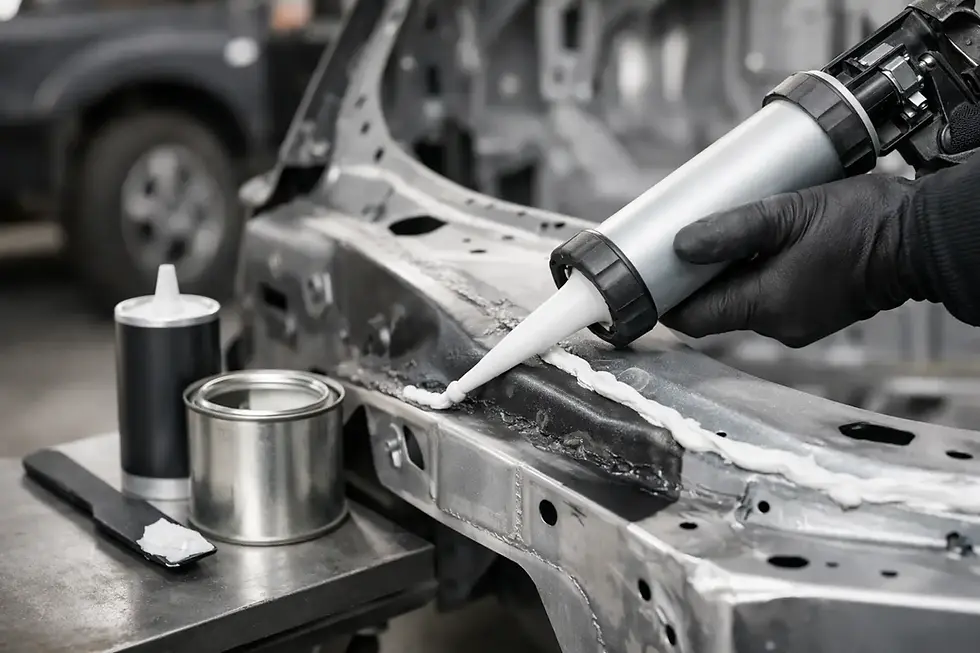
Body panels need clean prep, corrosion removal, sealing primer, and a durable finish system. Chassis parts need coatings that stand up to abrasion and chip damage. Floors and underbodies need both impact resistance and seam attention. Internal cavities need products that creep and protect after application.
For tools and shop equipment, the best method is often simpler: keep them dry, keep bare steel lightly protected, and avoid storing them where condensation forms. Even high-quality tools will rust if they live in an unheated, damp garage with no protective film.
For raw steel inventory in the shop, storage matters almost as much as coating. Keep material off concrete, out of standing humidity, and covered in a way that does not trap moisture. A breathable setup in a dry area beats plastic sheeting wrapped tight around damp steel.
Common Mistakes That Make Rust Come Back
The first mistake is coating over unstable rust. If the corrosion is flaking, expanding under the surface, or has already weakened the steel badly, the right fix may involve cutting and welding rather than more coating.
The second is ignoring seams, welds, lap joints, and backside access. Freshly repaired metal often looks great from the outside while the backside is left exposed. That is where repeat rust starts.
The third is mixing products without checking compatibility. Some primers, topcoats, and rust treatments play well together, and some do not. Staying within a proven system usually gives better results than piecing together random products from different categories.
The fourth is thinking appearance equals protection. A glossy finish is not automatically a durable barrier. What is underneath matters more than shine.
So, Which Is the Best Method to Prevent Rusting?
If you want the most practical answer for restoration and repair work, here it is: the best method is proper surface preparation followed by the right rust prevention coating system for that specific area, plus cavity protection where moisture hides. https://www.eastwoodcanada.com/product-page/eastwood-canada-4x-eastwood-internal-frame-coating-rust-prevention-aerosol-98049?currency=CAD
That answer is less catchy than naming a single product, but it is the one that holds up in the shop. Rust prevention is rarely about one miracle coating. It is about matching prep, product, and location so the metal stays sealed in the real world.
For most builders and shop owners, that means thinking in stages. Remove what is loose and failing. Repair metal that is too far gone. Seal exposed steel with a proven coating system. Protect seams and internal cavities. Then keep an eye on high-wear areas before small damage turns into corrosion again.
That approach takes more discipline up front, but it is cheaper than repainting, redoing bodywork, or reopening rust repairs a year later. When the goal is long-term protection, the best rust prevention method is the one that treats the whole problem, not just the surface.


Comments