
Eastwood Paint Products in Saskatchewan Shops

A Saskatchewan restoration project can go sideways long before the color coat hits the panel. A clean-looking hood may hide old repairs, flash rust, filler pinholes, or contamination that shows up only after paint is applied. That is why sourcing the right Eastwood paint products in Saskatchewan matters. A dependable finish starts with a complete system for preparation, corrosion control, priming, color, and protection - not a random collection of cans.
Eastwood Canada supplies restoration-focused products for builders who expect more from their garage work. Whether you are reviving a farm truck, finishing a weekend hot rod, repairing rocker panels, or repainting a race car, the goal is the same: build a finish that looks right and holds up.
Choosing Eastwood Paint Products in Saskatchewan
https://www.eastwoodcanada.com/paint?currency=CAD
Automotive paint is not a one-product decision. Every layer has a job, and skipping a step often creates a problem that cannot be fixed with extra clear coat. Before ordering materials, identify the condition of the surface, the type of repair, where the vehicle will be used, and how much of the vehicle you are painting.
A bare-metal repair needs a different approach than a sound factory panel that only needs refinishing. A driver that sees gravel roads, rain, and temperature swings needs serious corrosion protection underneath the visible finish. A show vehicle may demand more time spent blocking, sanding, and correcting minor panel flaws before color is applied.
The practical advantage of working within a restoration-oriented product lineup is that the products are built around the workflow. You can move from cleaning and metal treatment to primer, paint, clear, and protection without trying to make unrelated coatings work together.
Start With the Surface, Not the Paint Color
Paintwork is only as reliable as the surface beneath it. If rust, wax, oil, silicone, old adhesive, or loose paint remains on the panel, even a quality topcoat can fail early. The most expensive paint in the shop cannot make up for weak preparation.
Cleaning and stripping
Begin by removing grease, road film, polishing residue, and shop contamination. A dedicated surface cleaner is especially useful before sanding and again before spraying. Cleaning once at the start is not enough. Sanding can push contaminants into scratches, and handling the panel with bare hands can leave oils behind.
For failed paint, heavy corrosion, or thick old coatings, stripping and abrasive work may be necessary. The right method depends on the panel. Aggressive mechanical stripping is efficient on sturdy steel parts, but thin sheet metal can be damaged by heat or excessive pressure. On a hood, roof, or broad quarter panel, controlled abrasive work and patience usually beat trying to finish the job quickly.
Treating rust before it spreads
Saskatchewan vehicles face conditions that are hard on metal. Moisture, road salt, packed dirt, and seasonal storage can keep corrosion active in seams, wheel wells, rocker panels, floors, and inner structures. Surface rust should be addressed before it is buried under primer. Pitted metal, seam rust, and corrosion on the back side of a repair require a more deliberate plan.
Use the appropriate rust treatment or encapsulating coating where full removal is impractical, then protect the area with compatible primer and topcoat materials. For enclosed cavities and hidden seams, add a protective coating designed to reach areas a spray gun cannot. The visible side of a panel matters, but the underside and backside often determine how long the repair lasts.
Match the Primer to the Repair
https://www.eastwoodcanada.com/primer?currency=CAD
Primer is not just gray paint. It provides adhesion, corrosion resistance, build, or a workable surface for blocking, depending on the product selected.
An epoxy-style primer is a strong foundation for properly prepared bare steel, aluminum, and repair areas where corrosion resistance is a priority. It is often the right first layer after metalwork because it seals the surface and gives subsequent coatings a stable base. Follow the specified recoat window and surface-prep requirements. Primer systems work best when their timing and compatibility rules are respected.
High-build primer is useful when bodywork and sanding marks need to be leveled before color. It gives you material to block sand so the panel becomes straight rather than merely smooth. That distinction matters. A glossy color coat can make low spots and waves much more obvious, particularly on long doors, fenders, and flat body lines. https://www.eastwoodcanada.com/product-page/eastwood-products-paint-tools-coating-spray-rust-remover-welder-primer-gtpracing-3?currency=CAD
For small repairs, a quality primer aerosol can be practical. For full panels and complete vehicles, spray-gun-applied products generally offer more control and film build. The trade-off is equipment, cleanup, mixing, and ventilation. Choose the approach that matches the scale of the repair rather than forcing a spot-repair method onto a full restoration. https://www.eastwoodcanada.com/product-page/eastwood-products-paint-tools-coating-spray-rust-remover-welder-primer-14149z?currency=CAD
Build the Color System for the Job
Color selection is only part of the paint decision. You also need to account for coverage, metallic orientation, application method, temperature, and the final gloss level you want.
Single-stage paint combines color and gloss in one coating. It can be an efficient choice for chassis parts, engine bays, fleet-style finishes, and projects where durability and straightforward application matter more than the depth of a modern basecoat-clearcoat system. It also reduces the number of spray stages, which can be helpful in a smaller home shop.
A basecoat-clearcoat system separates color from protection and gloss. This gives builders more control over appearance and makes it easier to achieve the deep, finished look many modern restorations demand. Metallic and pearl colors often benefit from this approach, but they require careful spray technique. Uneven overlap or inconsistent gun distance can create striping, mottling, or dark patches in the metallic effect.
Before committing to a full vehicle, spray a test panel. It is one of the lowest-cost steps in a paint job and one of the most valuable. A test panel lets you check hiding power, spray pattern, flash time, color appearance, and clear coat gloss under real shop conditions. It can also reveal whether your gun setup needs adjustment before the actual body panels are on the stand.
Do Not Treat Clear Coat as an Afterthought
Clear coat protects the color layer from weather, washing, chemicals, and ultraviolet exposure while providing the gloss most builders want. The right clear depends on how the vehicle will be used and how much finishing work you plan to do afterward.
A durable clear is a sensible choice for a vehicle that will be driven regularly. A restoration intended for shows may justify a system with enough build for careful color sanding and polishing after cure. More material is not always better, though. Applying coats too heavily, too quickly, or outside the recommended temperature range can lead to runs, solvent issues, or a finish that takes longer to harden properly.
Pay attention to flash times. Spraying the next coat before the previous one has flashed can trap solvents. Waiting too long can affect intercoat adhesion. Product instructions are not filler reading. They are part of the paint system.
Set Up the Garage for Better Results
https://www.eastwoodcanada.com/shop-equipment?currency=CAD
A clean paint job needs clean air. Dust, poor lighting, weak air filtration, and moisture in the airline can turn a well-prepared panel into a frustrating rework job. You do not need a commercial collision-shop booth to get worthwhile results, but you do need to control the basics.
Use proper respiratory protection rated for the products being sprayed, along with gloves, eye protection, and suitable protective clothing. Maintain good ventilation and keep ignition sources away from flammable materials. A clean, organized work area reduces dirt in the finish and makes it easier to manage mixing, masking, and drying time.
Your air supply deserves the same attention as your spray gun. Water and oil contamination can cause fish-eyes, adhesion problems, and inconsistent results. Drain the compressor, use appropriate filtration, and confirm that the compressor can maintain the pressure and air volume your gun requires. A low-cost gun with clean, stable air can outperform a better gun fed by a neglected air system.
Complete the Job Beyond the Exterior Panels
A restoration is more convincing when the finish work extends beyond the visible body. Chassis components, brackets, engine compartments, wheel wells, and underbody repairs need coatings selected for their specific exposure. Heat, stone impact, brake dust, road debris, and fuel or chemical contact all change what makes sense for a given component.
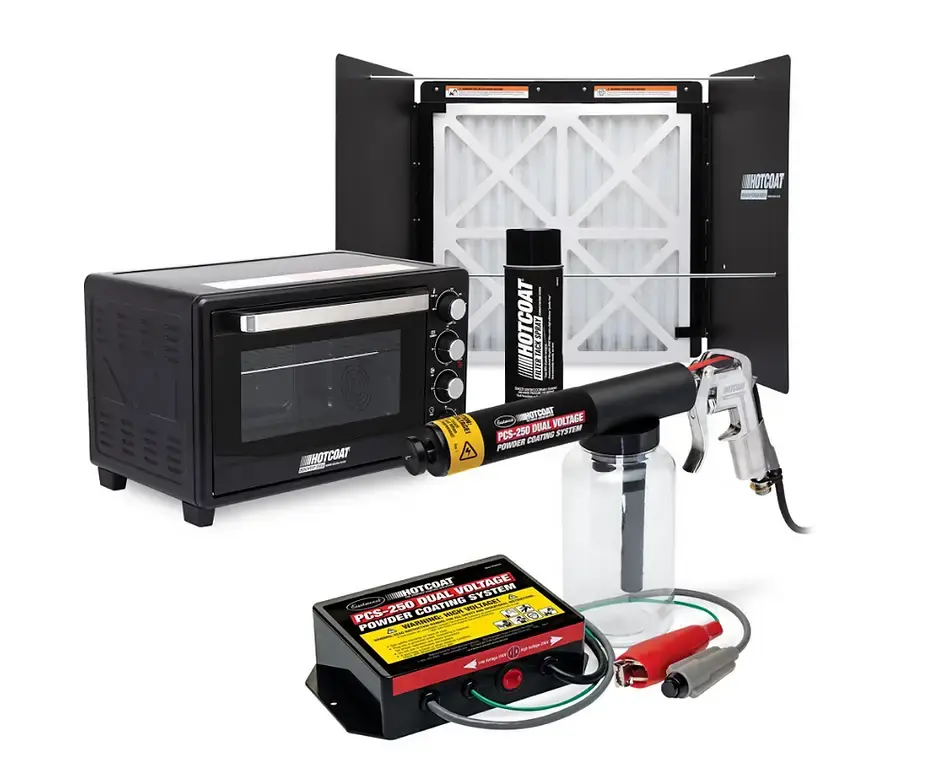
This is where a complete supplier matters. Abrasives, masking materials, rust-control coatings, spray equipment, powder coating supplies, and shop tools all support the same end result: a vehicle repaired with fewer compromises. Buying by task keeps the project moving and helps avoid stopping mid-job because an essential preparation product was overlooked.
A good finish is earned before the final coat is sprayed. Take the time to repair the metal, clean the surface, choose compatible layers, and test your setup. When the vehicle rolls into the sun for the first time, those decisions are what make the paint look like restoration work rather than a temporary cover-up.


Comments