

Eastwood Products in St. Jean-Richelieu, QC

A quarter-sized blister at the bottom of a door, a patch panel waiting to be welded, or a tired engine bay can turn a simple weekend project into a chain of decisions. For builders looking for eastwood products in st. jean-richelieu, qc, the right approach is not buying random supplies one at a time. It is choosing materials that work together from metal repair through final finish.
Restoration work rewards preparation. The paint may get the attention, but the results depend just as much on what happens beneath it: clean metal, controlled rust, sound seams, proper abrasives, and a garage set up to do repeatable work. That is where a restoration-focused product catalog earns its place.
Eastwood Products in St. Jean-Richelieu, QC for Real Shop Work
Whether you are restoring a classic, repairing a daily driver, building a track car, or improving an independent shop, start by identifying the stage of work in front of you. Rust treatment, paint preparation, welding, powder coating, and final detailing each call for different materials. Trying to force one product into every job usually costs more time than it saves.
Eastwood Canada https://www.eastwoodcanada.com/?currency=CAD gives Canadian builders access to specialized restoration supplies without having to piece together a process from general automotive maintenance products. The catalog is built around the work that happens in a real garage: stripping failed coatings, repairing corrosion, fabricating replacement metal, applying durable coatings, and bringing aged components back to a finish worth keeping.
The best purchase is rarely the most aggressive or expensive product on the shelf. It is the one that suits the substrate, the condition of the vehicle, the tools available, and the finish you expect when the work is done.
Start With the Condition of the Metal
Rust repair is a process, https://www.eastwoodcanada.com/rust-system?currency=CAD not a coating decision. Before choosing rust prevention products, inspect the area honestly. Surface discoloration on a solid panel can often be cleaned and stabilized. Metal that flakes, flexes, or has pinholes needs more than a chemical treatment. It may require cutting, fabrication, and welding before any protective coating goes on.
For solid metal, the objective is to remove loose corrosion and contamination, create a stable surface, and seal it before moisture gets another chance to work. Abrasives, wire wheels, stripping tools, and rust treatment products all have a role, but their order matters. Clean first. Repair damage second. Protect the finished surface third.
This is especially relevant on floor pans, rocker panels, wheel wells, trunk channels, frames, and suspension components. These areas see water, road debris, and salt, while also being difficult to inspect once the vehicle is reassembled. A durable underbody or chassis coating can be a smart investment, but only after loose scale and trapped moisture have been dealt with.
When a Rust Treatment Is Not Enough
A rust treatment can help prepare affected metal for coating, but it cannot restore thickness to compromised steel. If a screwdriver goes through the panel or an edge has become paper-thin, replace or patch the metal. The repair will be safer, stronger, and easier to finish properly.
After welding, https://www.eastwoodcanada.com/welding?currency=CAD clean the weld area, address heat-affected bare metal, and protect both sides of the repair where possible. The backside is often where corrosion begins again. Planning access before closing a panel is one of the small decisions that separates a lasting repair from a cosmetic one.
Build a Paint Process, Not Just a Paint Cart
A good paint job starts long before color. Builders in St. Jean-Richelieu working in a home garage or a small shop need to control the basics: surface cleanliness, sanding scratches, masking, air supply, temperature, and dust. Specialty paint products are useful only when the preparation underneath them is correct.
Begin with the existing finish. If it is stable, compatible, and well bonded, sanding and refinishing may be practical. If it is cracked, lifting, heavily repaired, or hiding corrosion, stripping back farther may be the better call. There is no universal answer. A sound factory finish and a failed repaint should not be treated the same way.
Use abrasives with a purpose. Coarser grits remove material and level damage. Finer grits refine the scratch pattern before primer or topcoat. Jumping too quickly between grits can leave scratches that appear after the paint cures, while spending too long with a coarse abrasive creates unnecessary work later.
Primers, fillers, sealers, and topcoats should be treated as a system. Follow the recommended preparation and recoat windows for the materials being used. Compatibility matters. A panel can look excellent after spraying and still develop adhesion problems if the layers were not given the right surface profile or cure time. https://www.eastwoodcanada.com/paint?currency=CAD
For a small repair, aerosols and touch-up supplies may be appropriate. For a complete respray, spray equipment, air management, masking materials, and enough workspace become part of the job. The trade-off is straightforward: a smaller setup costs less and works well for brackets, engine components, and localized repairs; larger paint work demands better control if you want consistent results.
Welding and Fabrication Should Solve the Problem
Fabrication tools earn their value when they make a repair cleaner and more repeatable. A basic patch can be formed with careful measuring, cutting, bending, and fitting. More complex work, such as floor sections, wheel tubs, mounts, or custom brackets, benefits from welding equipment and metal-shaping tools that give you control instead of forcing the part into place.
Fit-up comes before welding. Gaps that are too wide, poorly supported patches, and rushed tack placement make distortion more likely. Trim the replacement piece carefully, test-fit it several times, and use a welding sequence that limits heat buildup. Thin automotive sheet metal does not forgive long, continuous welds.
Keep safety in the plan. Remove fuel sources from the area, protect glass and wiring, and inspect the opposite side of the panel before striking an arc. Welding near seam sealer, insulation, or old undercoating can create hazards that are easy to miss from the visible side. https://www.eastwoodcanada.com/shop-equipment?currency=CAD
After the repair, grind only as much as needed. A weld does not have to disappear completely to be serviceable, and over-grinding can weaken the repaired area. Where appearance matters, work gradually and finish with the appropriate filler, primer, and coating process.
Coatings That Belong Beyond the Body Panels
Many of the most satisfying restoration wins happen on the parts removed from the vehicle. Suspension arms, brackets, hardware, valve covers, wheels, engine accessories, and shop-built components can be cleaned and refinished while the larger bodywork is underway.
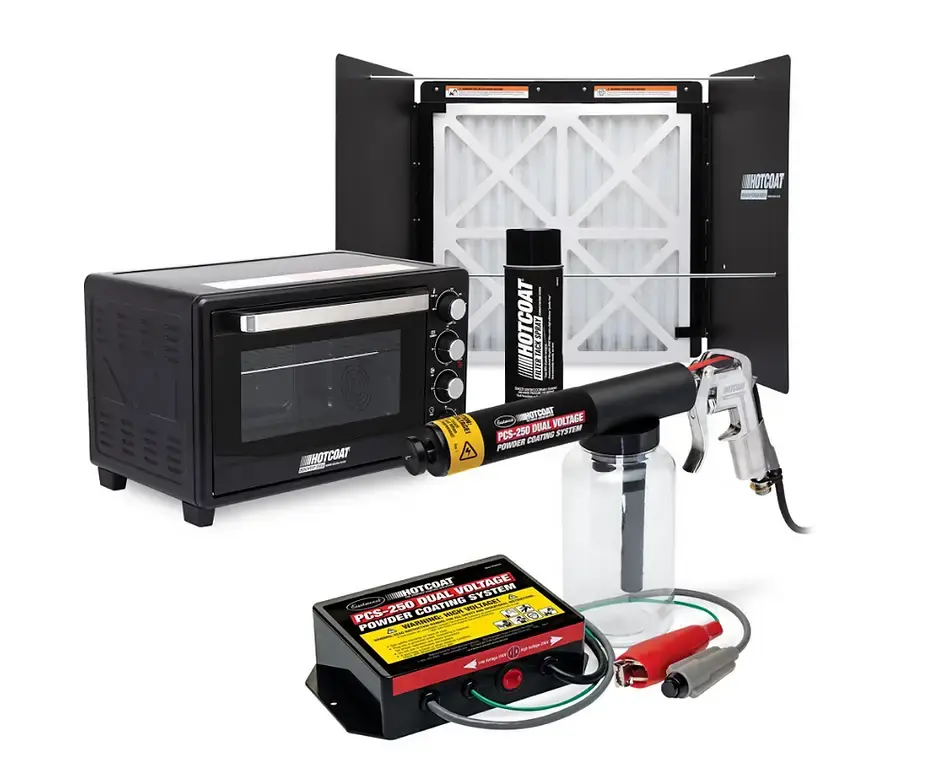
Powder coating supplies and equipment are a practical option for durable finishes on suitable metal parts. The finish can hold up well, but prep remains critical. Parts need to be thoroughly cleaned, stripped, and free of oils. Mask threaded holes, machined surfaces, and grounding points before coating so reassembly does not turn into a fight.
For parts that need a brushable or sprayable protective finish, specialized coatings can make sense when matched to the heat, chemical exposure, and abrasion the component will face. An engine bay bracket, a frame component, and a decorative interior trim piece do not live the same life. Choose accordingly.
Lettering enamel also has a place in a serious build. It can restore factory-style markings, add period-correct details, or finish custom signage and garage pieces. The detail is small, but clean lettering often makes a restored component look intentional rather than merely repainted.
Equip the Garage for the Jobs You Actually Do
A better garage does not necessarily mean filling it with machines. It means removing the bottlenecks that slow down your work. Good lighting reveals flaws before paint. Organized abrasives prevent using worn-out discs past their useful life. Reliable jacks, stands, welding protection, and air tools make jobs safer and less frustrating.
Prioritize equipment around your next few projects. If corrosion repair is the immediate problem, invest first in surface-prep and metal-repair capability. If you are rebuilding components, cleaning and coating tools may provide the biggest return. If custom fabrication is becoming a regular part of the work, then welding and shaping equipment become easier to justify.
Avoid buying solely for a single idealized project. The most useful tools https://www.eastwoodcanada.com/tools?currency=CAD are the ones that keep returning to the bench: dependable abrasives, measuring tools, cleaning supplies, welding consumables, coating prep materials, and storage that keeps them ready to use.
Buy for the Whole Repair, Then Get Back to Work
Before ordering, write down every stage between the panel or part as it sits now and the condition you want at reassembly. Include cleanup, rust control, repair, sanding, masking, coating, curing, and hardware protection. That short plan exposes the overlooked items that stop work halfway through a Saturday.
The goal is not to make every project complicated. It is to give the work a process that holds up after the vehicle leaves the garage. Choose the materials that fit the repair, protect the metal you cannot easily reach again, and keep building with the next stage already in mind.


Comments