

Rust Products for Roof Repair That Actually Last
- ERIC GIROUX
- 1 day ago
- 6 min read

A rust spot on a roof panel is rarely just a paint problem. Water can sit beneath a vinyl top, work into a windshield channel, creep through a roof seam, or collect under damaged trim. By the time the blister is visible, the metal may already be thin from the backside. Choosing rust products for roof repair starts with identifying where moisture entered and how much sound steel remains.
For restoration work, the goal is not to make rust look better for a season. It is to remove or stabilize corrosion, rebuild the surface correctly, and seal every path that allowed moisture in. The product sequence matters as much as the individual can on the shelf.
Start With the Roof Rust Assessment
Remove the trim, weatherstrips, headliner, roof rack hardware, vinyl covering, or molding around the affected area when practical. A roof can look clean from outside while the underside is scaly, damp, and actively corroding. Check the windshield and back-glass channels closely, especially on vehicles that have had leaking glass seals.
Light surface rust has not deeply pitted the panel and can usually be cleaned back to solid metal without cutting. Moderate corrosion leaves pits after wire brushing or blasting but does not compromise the panel’s strength. Severe corrosion shows perforations, paper-thin metal, soft edges around seams, or flaking layers between panels. At that point, no coating is a substitute for a patch panel or fabricated repair section.
This distinction saves time and money. Rust converters and encapsulating coatings are useful restoration tools, but they cannot restore metal that has already disappeared. If pushing lightly on the area flexes the panel or breaks away scale, plan for metal repair first.
Rust Products for Roof Repair: Build a System
https://www.eastwoodcanada.com/rust-encapsulator-plus?currency=CAD
A lasting repair commonly uses several product categories, each assigned to a specific job. Trying to use one coating for cleaning, conversion, sealing, priming, and finishing usually creates a weak link.
Surface Preparation Products
Mechanical removal comes first. A wire wheel, strip disc, abrasive pad, or media blasting can remove loose scale, old paint, and failed filler. Roof skins are broad and relatively thin, so manage heat. Do not grind one spot aggressively until the metal turns blue or warps. Move continuously, use moderate pressure, and clean a larger area than the visible rust stain.
For seams, channels, pinch welds, and tight corners, chemical cleaning can reach places a disc cannot. A dedicated metal cleaner removes oily contamination and residue before a coating is applied. This step is easy to overlook, but roof repairs often involve old adhesive, polishing compounds, wax, or residue from prior paintwork. Coatings bond to clean metal, not contamination.
Rust Converters
https://www.eastwoodcanada.com/rust-converter?currency=CAD
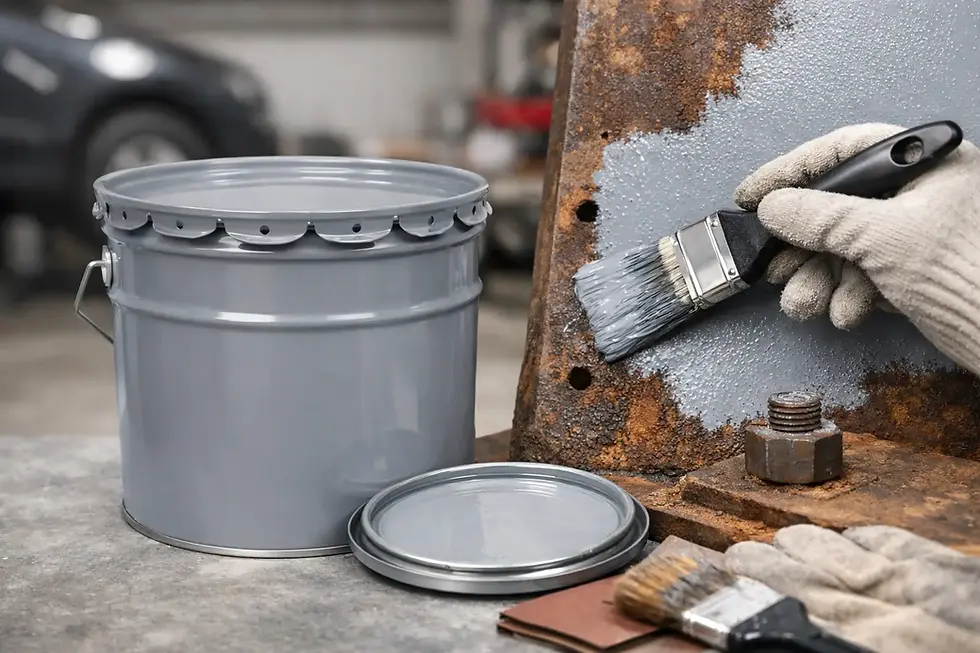
A converter is most useful on tightly adhered oxidation left in pits, seams, and inaccessible textured areas after mechanical cleaning. It chemically changes the remaining rust into a more stable surface that can accept the next coating, provided the product directions are followed exactly.
Do not apply a converter over loose, flaky rust and expect it to stop a spreading problem. Remove everything that will come off first. Also check the required topcoat window. Some converters need to dry fully, while others require rinsing or a specific primer before paint. Product compatibility is not a detail to guess at on a roof panel that is expensive to repaint.
Rust Encapsulating Coatings
Encapsulating coatings are designed to isolate prepared, stable corrosion from air and moisture. They are a practical choice for the underside of a roof skin, inside a pillar, under a drip rail, or in other areas where blasting every pit to bright metal is unrealistic.
They work best over firm, prepared surfaces. An encapsulator is not body filler, and it is not meant to level a pitted roof exterior before finish paint. Where the outer roof skin needs a show-quality surface, use the encapsulating coating where appropriate, then follow the manufacturer’s instructions for primer, filler, sanding, and refinishing.
Epoxy Primer and High-Build Primer
https://www.eastwoodcanada.com/primer?currency=CAD
Bare steel needs protection quickly, particularly in humid shops and during long restoration projects. A quality epoxy primer provides a corrosion-resistant foundation and gives subsequent coatings a dependable surface to bond to. It is especially valuable after a roof repair has been stripped, welded, or media blasted.
High-build primer serves a different purpose. It fills sanding scratches and minor surface texture so the roof can be block-sanded straight before color. It should not be used to hide severe pitting, cracked seams, or poor welds. If the repair needs more than a reasonable amount of primer to look flat, stop and correct the metalwork or filler work underneath.
Seam Sealer, Cavity Protection, and Topcoat
https://www.eastwoodcanada.com/kbscoating?currency=CAD
Roof seams and glass channels need to be resealed after corrosion repair. Use an automotive seam sealer in the same locations where the factory used one, after the proper primer stage. Recreating the seal matters because moisture often starts its work at a seam edge, not in the middle of an otherwise sound roof panel.
After exterior paint is complete, protect hidden areas from the inside. Cavity wax or another corrosion preventive coating can be applied into pillars, roof braces, and enclosed seams where moisture may return. Keep drains and water paths open. A coating cannot compensate for blocked drains, damaged glass seals, or trim that traps water against the panel.
Repair Order Depends on the Damage
For light surface rust on an exposed roof skin, clean to sound metal, treat any stubborn pits as needed, apply epoxy primer, then complete the normal primer and paint process. This is the cleanest route when the panel is structurally sound and accessible from both sides.
For corrosion around a windshield channel or drip rail, remove the glass or trim needed to expose the full damaged area. Clean and repair the metal, then prime, reseal, and refinish before reinstalling components. Painting over the edge of a failed windshield seal may make the roof look better temporarily, but it leaves the water entry point in place.
For pinholes or perforation, cut back to solid steel and weld in a properly shaped patch. Treat the rear of the repair before closing access whenever possible. Once welded, grind carefully, prime both accessible sides, seal the seam, and use body filler only for final contour correction. Filler over active rust or unsupported metal will eventually crack and telegraph through the paint.
Common Roof Repair Mistakes
The most common mistake is treating only the visible side. If the inner roof structure, brace area, or glass channel remains wet and rusty, corrosion can restart under a fresh exterior finish. Pulling the headliner may add work, but it can reveal the actual source of the damage.
Another mistake is applying thick coatings over loose scale. Heavy material may hide texture, yet moisture continues traveling beneath it. The repair looks finished until bubbles return at the edge of the coating.
Heat damage is another concern. Excessive grinding, welding without a plan, or using a high-speed abrasive in one location can warp a large roof skin. Use short welds spaced apart, allow cooling time, and dress welds patiently. A little extra prep time is cheaper than correcting a distorted roof panel.
Finally, do not ignore the paint system. Primer, seam sealer, filler, color, and clear need to be compatible with one another and applied within their specified windows. Eastwood Canada carries restoration-focused rust treatment, coating, paint, and shop supplies so you can build the repair around the condition of the panel rather than forcing a one-product fix.
Match the Product to the Part of the Roof
The exterior skin needs a smooth, paint-ready foundation. The underside of the skin and enclosed brace areas need durable corrosion protection. Seams need flexible sealing, while channels around glass need both sealing and careful paint coverage. These are different jobs, even though they are all part of the same roof.
That is why a practical roof repair often uses more than one rust-control product. Use mechanical cleaning where access allows it, conversion where stable rust remains in pits, encapsulation in protected hidden areas, epoxy primer on prepared steel, and cavity protection after assembly. Each layer should solve a real problem, not simply add thickness.
A roof is one of the most visible panels on the vehicle, and it is also one of the hardest to revisit after glass, trim, headliner, and paint are back in place. Take the time to expose the cause of the corrosion, repair solid metal first, and seal the hidden side before the final finish goes on. That extra work is what keeps a clean roof from becoming the same repair again two years later.


Comments