
Understanding Powder Coating Peeling: Best Practices for Longevity and Protection
- ERIC GIROUX
- 4 days ago
- 4 min read

Powder coating offers a durable and attractive finish for many products, especially automotive parts. Yet, peeling remains a common issue that undermines its protective qualities and aesthetic appeal. Understanding why powder coat peels is essential to prevent failures and extend the life of coated items. This post explores the main causes of powder coating peeling, focusing on preparation, contamination control, curing processes, and the choice of coating systems. It also highlights the serious consequences of peeling on automotive parts and encourages viewing powder coating as a comprehensive process rather than just a finish.
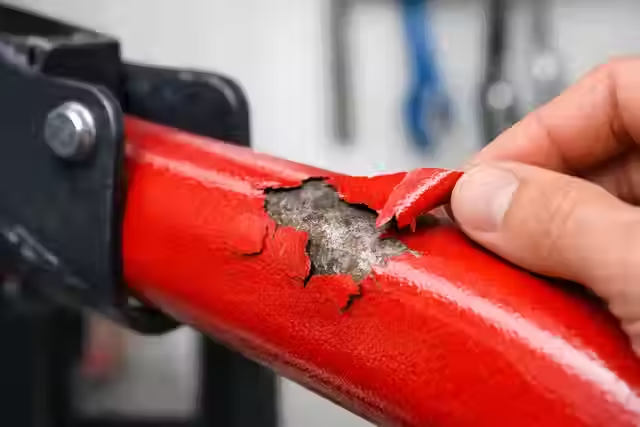
Close-up of peeling powder coating on an automotive metal part showing surface damage and corrosion starting underneath
Why Powder Coating Peels
Peeling happens when the powder coating loses adhesion to the substrate. This failure can occur for several reasons, often related to how the surface was prepared, the environment during application, or the curing process. The main causes include:
Improper surface preparation
Powder coating requires a clean, roughened surface for the coating to bond properly. If the metal is oily, dirty, or has rust, the powder will not adhere well. For example, skipping or poorly performing abrasive blasting can leave contaminants that cause peeling.
Contamination during application
Dust, oils from handling, or moisture on the surface before coating can create weak spots. Even fingerprints can introduce oils that interfere with adhesion.
Incorrect curing
Powder coatings must be cured at specific temperatures and times to fully cross-link and harden. Under-curing leaves the coating soft and prone to peeling, while over-curing can cause brittleness and cracking.
Using the wrong coating system
Not all powder coatings suit every substrate or environment. For instance, using a standard polyester powder on parts exposed to harsh chemicals or moisture can lead to early failure. Choosing a coating designed for the specific application is critical.
The Importance of Proper Preparation
Preparation is the foundation of a successful powder coating job. It involves cleaning, degreasing, and surface profiling to ensure the coating bonds well.
Cleaning and degreasing
All oils, greases, and dirt must be removed. This often involves chemical cleaning or alkaline washing. Even small residues can cause peeling.
Surface profiling
Abrasive blasting creates a rough surface that helps the powder grip the metal. The profile depth depends on the coating type but typically ranges from 1 to 3 mils (25 to 75 microns).
Handling precautions
After preparation, parts should be handled with gloves or tools to avoid recontamination. Storing prepared parts in clean, dry areas prevents dust and moisture buildup.
Contamination Control During Application
Contamination can happen at any stage after preparation. Controlling the environment and handling is crucial.
Clean application area
Powder coating booths should be free of dust and debris. Regular cleaning and proper ventilation reduce airborne contaminants.PREP | Eastwood Canada
Proper equipment maintenance
Spray guns and booths must be cleaned regularly to prevent buildup that can flake off and embed in the coating.
Avoid moisture exposure
Humidity can cause powder to clump or create bubbles during curing, weakening adhesion.
Curing Process and Its Impact on Adhesion
Curing transforms the powder from a dry powder into a solid, durable film. It requires precise control of temperature and time.
Follow manufacturer specifications
Each powder coating has a recommended curing temperature and duration. For example, many polyester powders cure at around 180°C (356°F) for 10-15 minutes.
Use calibrated ovens
Uneven heating or incorrect temperatures can cause under- or over-curing.
Monitor part thickness and mass
Larger or thicker parts may need longer curing times to reach the proper internal temperature.
Choosing the Right Coating System
Not all powder coatings are created equal. Selecting the right system depends on the part’s use and environment.
Polyester powders
Common for automotive parts due to UV resistance and good durability.
Epoxy powders
Excellent chemical resistance but poor UV stability, often used for indoor parts.
Hybrid powders
Combine properties of polyester and epoxy for balanced performance.
Using a coating not designed for the specific conditions can lead to peeling, cracking, or fading.
Implications of Peeling on Automotive Parts
Peeling powder coating on automotive parts is more than a cosmetic issue. It exposes the metal underneath to moisture and chemicals, accelerating corrosion and reducing part lifespan.
Moisture penetration
Water can seep under the peeled areas, causing rust that spreads beneath the coating.
Chemical exposure
Road salts, oils, and cleaning agents can attack unprotected metal, leading to pitting and structural damage.
Safety concerns
Corroded parts may weaken critical components like suspension or brake parts, posing safety risks.
Increased maintenance costs
Peeling coatings require repairs or replacement sooner, increasing downtime and expenses.
Viewing Powder Coating as a Process
Powder coating is not just a finish applied at the end of production. It is a multi-step process that requires attention to detail at every stage.
Planning and design
Consider the environment and stresses the part will face to select the right coating.
Surface preparation
Invest time and resources to clean and profile the surface properly.
Application control
Maintain clean conditions and use well-maintained equipment.
Curing management
Ensure ovens are calibrated and parts are cured according to specifications.
Inspection and testing
Regularly check coating thickness, adhesion, and appearance to catch issues early.
By treating powder coating as a process, manufacturers and users can achieve long-lasting protection and appearance.


Comments